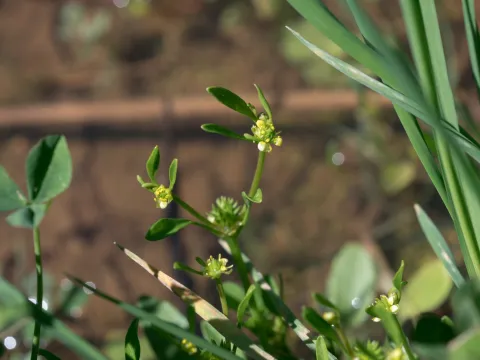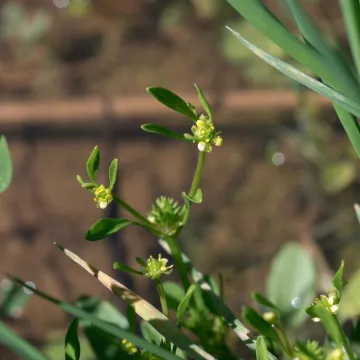
Side-flowered buttercup
Ranunculus lateriflorus
Description
Side-flowered buttercup (Latin Ranunculus lateriflorus) is an annual herbaceous plant belonging to the Ranunculaceae family. In agricultural science, this plant is recognized for its adaptation to specific aquatic and semi-aquatic habitats, playing a significant role in wet meadow ecosystems.
The species originates from temperate and subtropical regions of Eurasia, with a distribution range extending through Southern Europe, the Middle East, and parts of Central Asia. It is primarily found in wetland areas, seasonally flooded fields, and along the edges of marshes, where soil moisture remains consistently high throughout the year.
Botanically, the plant features a distinct structure with a branched stem reaching up to 40 cm in height. Its simple leaves and lateral inflorescences set it apart from other species in the Ranunculus genus. The small yellow flowers, appearing along the stems, are an evolutionary adaptation that facilitates efficient pollination within dense vegetation.
The agronomic requirements for this plant are centered on its need for high soil moisture levels. It thrives in heavy, silty, or clay-based soils that retain water well. Unlike conventional crops, it does not require significant soil cultivation or tilling, but rather benefits from stable hydrological conditions and protection from invasive, faster-growing weeds.
The economic and agricultural utility of the side-flowered buttercup is focused on environmental management rather than fodder production. Because the plant contains protoanemonin, it is considered toxic to livestock. However, it is valuable for soil stabilization in low-lying areas and acts as a beneficial plant for attracting pollinators and supporting biodiversity in rural landscapes.
Cultivation challenges are mostly related to environmental pathogens. Common diseases include leaf spots and fungal infections exacerbated by high humidity or poor aeration. Pest pressure from aphids and leaf beetles requires careful observation, although the plant's natural toxicity often provides some level of protection against herbivores.
Photo gallery