Greater spearwort
Ranunculus lingua
Description
Greater spearwort (Ranunculus lingua) is a perennial herbaceous plant belonging to the Ranunculaceae family. As one of the largest species in the genus Ranunculus, it is highly valued for its striking appearance and its robust growth habit in wetland environments. It is a prominent species in both ecological restoration and ornamental pond planting.
The native range of this plant extends across most of Europe and temperate Asia. It is naturally found in habitats characterized by high moisture, such as the margins of lakes, slow-moving rivers, marshes, and ditches. This wide distribution highlights the plant's adaptability to various nutrient-rich, waterlogged soil types found throughout the temperate zone.
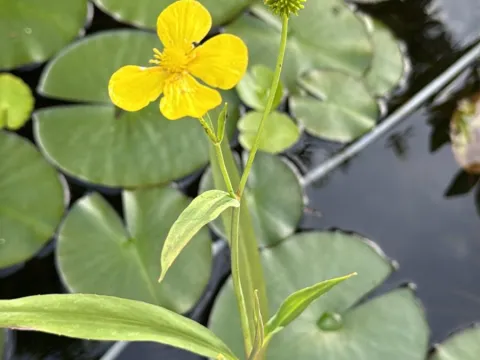
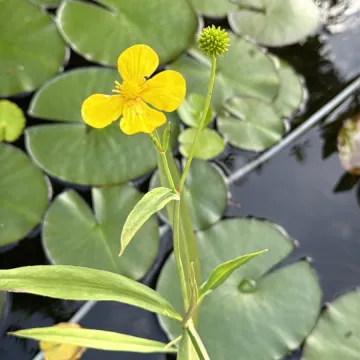
Botanically, Ranunculus lingua is distinguished by its tall, erect stems that can grow up to 1.2 meters. The leaves are lanceolate, parallel-veined, and glossy, providing a strong structural element to any planting scheme. The flowers are bright yellow, saucer-shaped, and appear singly or in small clusters at the top of the stems during the peak summer months.
Cultivation requires specific conditions: the soil must remain consistently saturated. In a garden setting, it thrives when planted in damp soil near a pond or in shallow water no deeper than 30 cm. It is a hardy perennial, but it demands full sun or partial shade to produce maximum flower display. Propagation is efficiently achieved through the division of rhizomes during the dormancy period.
The primary use of the greater spearwort is in landscaping, particularly for softening the edges of man-made water features. While it adds aesthetic value, it is essential to note that the plant is mildly toxic. Like other members of the Ranunculaceae family, it contains protoanemonin, which can cause skin irritation, so protective gloves are recommended during maintenance activities such as dividing or pruning.
- Family: Ranunculaceae
- Max height: 120 cm
- Habit: Rhizomatous, semi-aquatic
- Bloom time: June to August
- Toxicity: Irritant sap
Photo gallery