Stiff water crowfoot
Ranunculus longirostris
Description
Stiff water crowfoot (Ranunculus longirostris) is an aquatic perennial plant belonging to the Ranunculaceae family. Unlike common meadow buttercups, this species is specifically adapted to submerged environments, thriving in freshwater habitats such as ponds, lakes, and slow-moving streams where it acts as a primary producer.
The plant is native to North America, widely distributed across various ecological zones where water bodies provide stable conditions. Its habitat usually consists of shallow zones with mineral-rich sediments, which support the plant's nutritional needs and anchor its root system firmly against mild water currents.
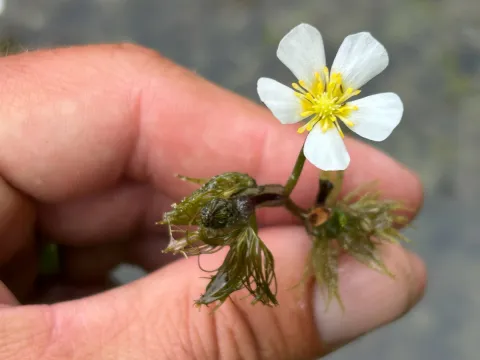
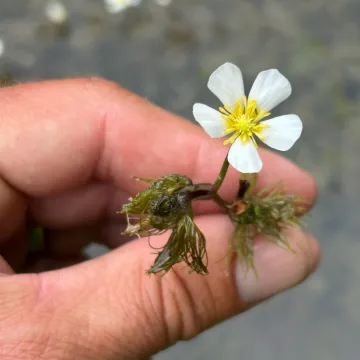
Botanically, Ranunculus longirostris is characterized by its finely divided, thread-like submerged leaves that minimize drag and maximize nutrient absorption from the water column. The stems are branched and flexible. During the reproductive phase, the plant produces small white flowers with yellow centers that rise just above the water's surface, pollinated by insects.
Agricultural and cultivation requirements focus primarily on water quality management. This species prefers clear, alkaline waters and is sensitive to high turbidity and excessive siltation. In managed aquatic systems, it is essential to monitor water depth and light penetration, as shade significantly inhibits the growth and spread of the colonies.
Regarding its utility, the plant is primarily managed for ecological restoration projects and as a component of constructed wetlands. It plays a significant role in providing habitat for aquatic fauna and oxygenating the water. Pests and diseases are generally minimal, although fungal infections may occur if the water becomes stagnant or if the plant suffers from high mechanical stress.
Photo gallery