Macoun's buttercup
Ranunculus macounii
Description
Macoun's buttercup (Latin: Ranunculus macounii) is a herbaceous perennial plant belonging to the Ranunculaceae family. It is recognized as a hardy species capable of thriving in diverse, typically moist environments across its native range, making it a significant plant for studies in ecological adaptation and wetland biology.
The plant is native to North America, widely distributed across Canada and the northern regions of the United States. Its natural habitats include streambanks, marshes, damp meadows, and riparian forest fringes. It is perfectly adapted to climates where high moisture levels and cool, humid soil conditions persist during the active growing season.
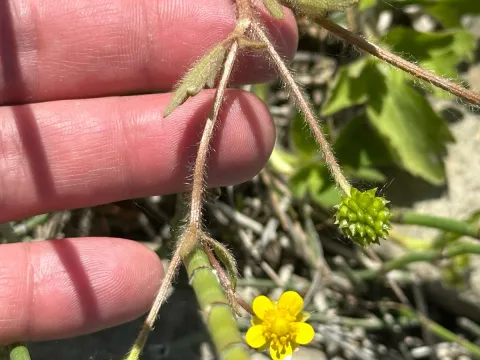
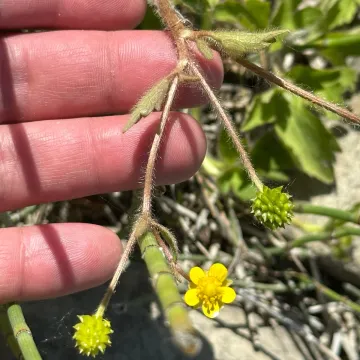
Botanically, Ranunculus macounii features a branched stem that can reach significant heights compared to other buttercup species. Its leaves are usually ternately compound with serrated margins, providing a distinct appearance. The flowers are small, yellow, and typical of the Ranunculus genus, blooming to produce achenes that are often dispersed via hydrological processes in its native environment.
Cultivation requirements are strict regarding moisture management. The plant flourishes in rich, loamy, and consistently damp soils. Unlike ornamental buttercups that may require well-drained soil, this species prefers the moist margins of water bodies. When cultivated, it is essential to ensure that the substrate remains hydrated; drought stress is the primary factor limiting its growth and aesthetic vigor.
Economic and utility applications are primarily concentrated in environmental restoration and landscape design near water features. Due to the presence of protoanemonin, the plant is considered toxic if ingested by livestock, which necessitates caution if it colonizes grazing areas. Common pests may include aphids or fungal pathogens that thrive in high-humidity environments, requiring careful monitoring to ensure plant health.
- High moisture requirements
- Excellent tolerance for wetlands
- Avoidance of direct scorching sunlight
- Presence of natural toxic compounds
- Propagates well through seed dispersion
Photo gallery