Bordered buttercup
Ranunculus marginatus
Description
The bordered buttercup (Ranunculus marginatus) is a herbaceous plant belonging to the Ranunculaceae family. While not an intentional agricultural crop, it is a significant species in regional botanical studies and is often encountered in agricultural environments due to its adaptability to disturbed wet soils.
The species originates from the Mediterranean basin and parts of Western Asia. It is typically found in lowland areas, seasonal wetlands, and margins of arable fields. Its distribution is closely linked to specific climatic conditions where winter and spring precipitation ensure sufficient soil moisture for seed germination and early vegetative development.
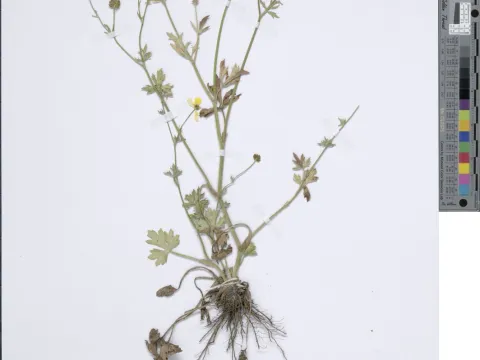
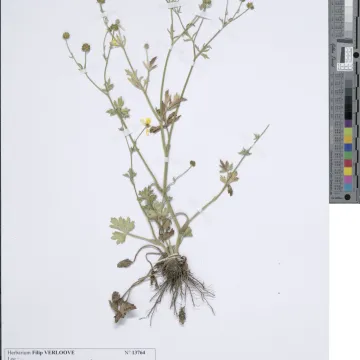
Botanically, Ranunculus marginatus is defined by its pubescent (hairy) achenes, which distinguish it from other buttercup species. The plant typically features erect stems and lobed basal leaves. Like many members of the genus, it exhibits a robust root system that helps it survive fluctuating water levels, allowing it to colonize ditches and poorly drained field corners.
Environmental requirements include a preference for moist to waterlogged soil conditions and moderate to warm temperatures. From an agronomic perspective, it is considered an indicator of poor soil drainage. Effective management involves improving land drainage and implementing mechanical weeding techniques to prevent its spread in pastures and forage crop areas.
The economic impact of the plant is primarily related to its toxicity. It contains protoanemonin, which can cause irritation to the digestive tract and skin of livestock. Consequently, it is categorized as a nuisance species in agricultural settings. Understanding its life cycle helps agronomists mitigate its impact on pasture quality and ensures safer animal husbandry practices.
- Belongs to the Ranunculaceae family.
- Indicator species for soil moisture.
- Contains toxic secondary metabolites.
- Common in damp Mediterranean meadows.
Photo gallery