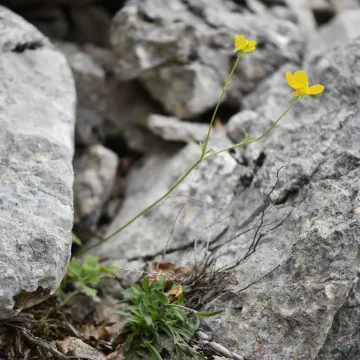
Montpellier buttercup
Ranunculus monspeliacus
Description
The Montpellier buttercup (Ranunculus monspeliacus) is a herbaceous perennial plant belonging to the Ranunculaceae family. Known for its distinct foliage and bright yellow flowers, this species is increasingly valued in ornamental horticulture for its ability to add texture and color to garden landscapes.
Native to the Mediterranean regions of Europe, the plant is naturally adapted to sunny, open habitats with well-drained soils. Its distribution spans across southern European landscapes, where it thrives in meadows and rocky terrain. Understanding its native ecological niche is essential for successful cultivation in domestic gardens.
Botanically, the species is characterized by a basal rosette of deeply lobed, attractive leaves. The flowering stems arise in spring, topped with solitary yellow blooms that typify the buttercup genus. The root system is generally fibrous, requiring a substrate that allows for adequate oxygen exchange to prevent root decay.
Regarding cultivation requirements, the Montpellier buttercup prefers sunny locations with light, well-draining soils. It is moderately drought-tolerant once established, but providing consistent moisture during the active growing season will significantly improve the quality and quantity of blooms. A neutral to slightly alkaline soil pH is typically ideal for this species.
In terms of maintenance, this plant is prone to common garden pests, including aphids and spider mites, which should be monitored regularly. Additionally, fungal pathogens like powdery mildew can affect the foliage in humid or crowded conditions. Proper spacing and ensuring good air circulation are the primary non-chemical strategies for maintaining plant health and vigor.
Photo gallery