Spiny-fruit buttercup
Ranunculus muricatus
Description
The spiny-fruit buttercup (Ranunculus muricatus) is an annual plant species belonging to the Ranunculaceae family. In the context of modern agriculture, it is classified as a significant weed that thrives in disturbed, moist habitats, often posing a threat to productivity in cultivated fields and managed irrigation systems across temperate and Mediterranean regions.
The origin of this species is traced back to the Mediterranean basin, from where it has naturalized in various parts of the globe, including North America and Australia. Its habitat range is strictly defined by moisture levels, as the plant demands constant water availability, making it a common sight in wetlands, canal banks, and poorly drained arable land.
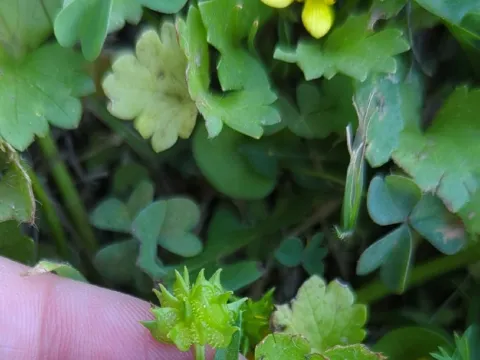
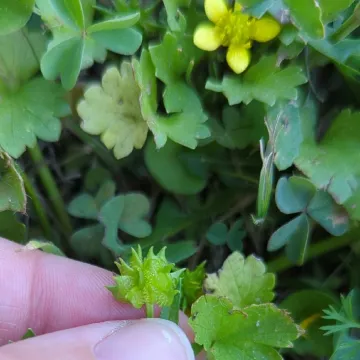
Morphologically, the plant is distinguished by its peculiar fruits—achenes that are covered with prominent spines or tubercles. It develops a spreading habit with deeply lobed, often glossy green leaves. The bright yellow, five-petaled flowers bloom in spring, producing a large number of seeds that ensure its persistence in the soil seed bank for several seasons.
Agricultural management requires rigorous attention to soil drainage and weed control measures. Because the plant is competitive, especially in early spring, farmers often employ a combination of mechanical tillage and integrated chemical control. It is particularly difficult to manage in fields where continuous cropping systems are practiced without proper rotation or chemical fallowing.
From an economic standpoint, the plant is considered harmful rather than beneficial. Like other Ranunculus species, it contains protoanemonin, a toxic oil that causes severe inflammation and digestive issues if ingested by livestock. Therefore, its presence in fodder crops is strictly monitored to prevent poisoning of horses, cattle, and sheep, making it a target for selective eradication in agricultural landscapes.
- Highly sensitive to competitive canopy closure from dense crop stands.
- Seeds can remain viable in the soil for extended periods.
- Mechanical control is most effective before the flowering stage.
Photo gallery