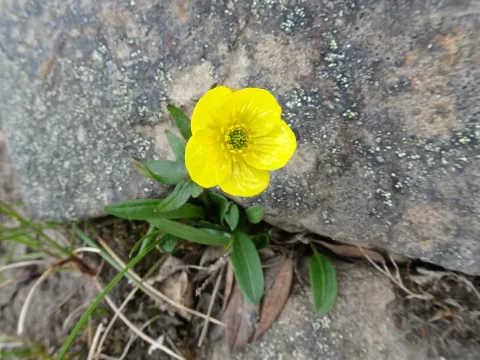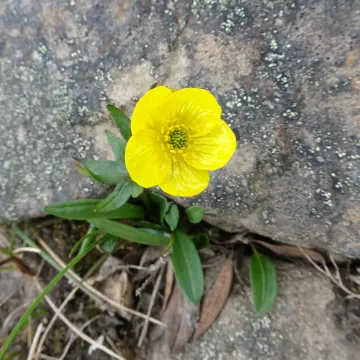
Snow buttercup
Ranunculus nivalis
Description
Snow buttercup (Ranunculus nivalis) is a perennial herbaceous plant classified within the Ranunculaceae family. This species is a classic example of arctic and alpine flora, evolutionarily perfected to survive in the most extreme high-altitude and polar environments on the planet.
The plant originates from the circumpolar regions, spanning areas such as Greenland, Northern Scandinavia, Canada, Alaska, and high-mountain ranges in Siberia. While not a conventional agricultural crop, it is cultivated in specialty nurseries and botanical institutions focused on alpine and arctic plant propagation.
Botanically, the snow buttercup features a strong rhizome, a shortened stem, and fleshy basal leaves. Its hallmark is the vibrant yellow flower, often featuring dark, woolly hairs on the sepals and flower stalk, which act as a thermal adaptation to capture solar energy and protect against harsh winds during the brief growing season.
Regarding agrotechnical requirements, the species demands well-draining, moist, slightly acidic soils. Cultivation success depends on high solar exposure during the growth phase and a strict requirement for a cool, dormant period. In garden settings, one must simulate the conditions of thawing glaciers to prevent root rot and overheating, which are fatal to this high-latitude species.
The plant has limited commercial utility, primarily used in decorative rock gardens and tundra restoration projects. Like many members of the Ranunculaceae family, it contains protoanemonin and other alkaloids, making it potentially toxic if ingested by livestock. Pathological risks include susceptibility to fungal pathogens if grown in stagnant, poorly ventilated, or overly warm conditions.
- Extreme cold tolerance and permafrost adaptation.
- Distinctive woolly pubescence on floral organs.
- Critical requirement for soil drainage.
- Limited agricultural use due to natural toxicity.
- Specialized niche in alpine botanical collections.
Photo gallery