Pallas's buttercup
Ranunculus pallasii
Description
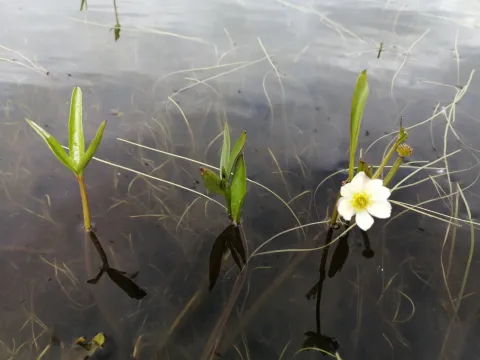
Pallas's buttercup (Latin: Ranunculus pallasii) is a perennial herbaceous plant belonging to the Ranunculaceae family. It is a highly specialized species adapted to the challenging environments of the circumpolar arctic and subarctic regions.
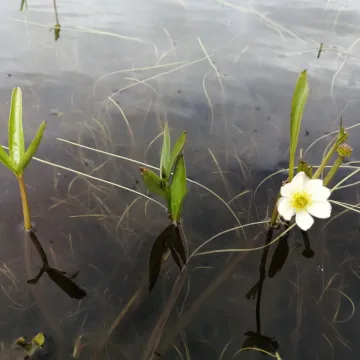
The plant originates from the cold northern latitudes of Eurasia and North America. Its natural habitat includes wetlands, muddy shorelines, and shallow ponds. It demonstrates a remarkable ability to survive in waterlogged soils where many other terrestrial species would fail due to lack of oxygen in the root zone.
Botanically, it is characterized by its creeping stems and simple, entire leaves that are distinct from the deeply lobed leaves common in many other buttercup species. This morphology is an evolutionary response to living partially submerged in cold water, where surface area management for gas exchange is vital.
Cultivation requirements are strict and resemble those of aquatic or bog plants. Successful growth depends on maintaining a low temperature and high soil acidity. Standard agricultural practices for row crops are not applicable here; instead, gardeners and researchers must focus on maintaining constant hydration and preventing the development of waterborne fungal pathogens.
The economic use of this plant is minimal, primarily confined to scientific research and the restoration of arctic tundra ecosystems. Due to the presence of protoanemonin and other alkaloids in the plant tissues, it is not utilized for forage, and care should be taken to avoid contact with sensitive skin or ingestion by livestock.
Photo gallery