Birdfoot buttercup
Ranunculus pedatifidus
Description
Birdfoot buttercup (Ranunculus pedatifidus) is a perennial herbaceous plant belonging to the Ranunculaceae family. It is a highly specialized species adapted to harsh arctic, subarctic, and alpine environments, serving as a critical indicator species for the ecological health of northern meadow ecosystems.
The plant has a circumpolar distribution, widely found across northern Eurasia and North America. It thrives in open, well-drained habitats such as tundra, rocky slopes, and mountain meadows. Its ability to colonize nutrient-poor and stony soils makes it a resilient member of its native plant communities, often appearing in areas where competition from other species is minimal due to cold temperatures.
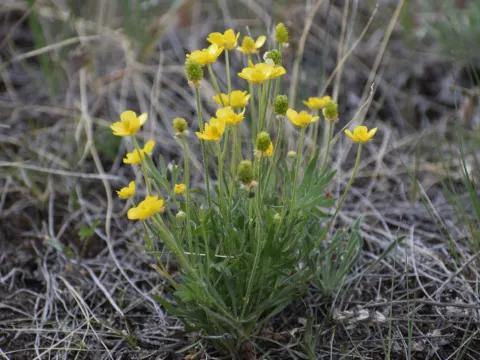
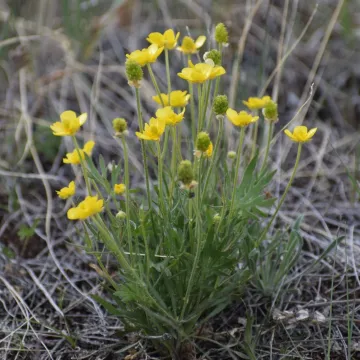
Morphologically, Ranunculus pedatifidus is characterized by a basal rosette of finely divided, pedate leaves and upright stems bearing vibrant yellow flowers. The plant exhibits rapid developmental cycles, allowing it to complete flowering and seed production within the short arctic growing season, ensuring the survival of the population despite unpredictable weather events.
Regarding agricultural and cultivation requirements, the species demands cool temperatures and significant sunlight. In soil management, it prefers neutral to slightly alkaline substrates with excellent drainage. Cultivation attempts are rare outside of botanical research, as the plant does not perform well in warmer climates, showing susceptibility to heat stress and moisture-related fungal diseases.
The agricultural use of this species is primarily limited to its presence in natural pastures. Because the plant contains protoanemonin, it is considered toxic to livestock when fresh, potentially causing irritation to the digestive tract. However, the toxins decompose during the drying process, and in cured hay, it becomes a non-toxic component of the natural forage diet, contributing to the botanical diversity of extensive grazing systems.
- Extreme cold and frost tolerance.
- Excellent adaptation to alpine and tundra soils.
- Rapid life cycle suited for short growing seasons.
- Natural toxicity in fresh state requiring caution in grazing management.
Photo gallery