Bristly buttercup
Ranunculus pensylvanicus
Description
The bristly buttercup (Ranunculus pensylvanicus) is a herbaceous perennial plant belonging to the Ranunculaceae family. In agricultural contexts, it is primarily recognized as a weed species common in wetlands, damp pastures, and riparian zones, often impacting the quality of forage crops grown in low-lying, poorly drained areas.
Native to North America, this species thrives in temperate climates. Its natural range extends across Canada and the northern United States, where it populates moist soils, such as riverbanks, marshes, and damp woodlands. It is highly adapted to environments that maintain consistent soil moisture throughout the growing season.
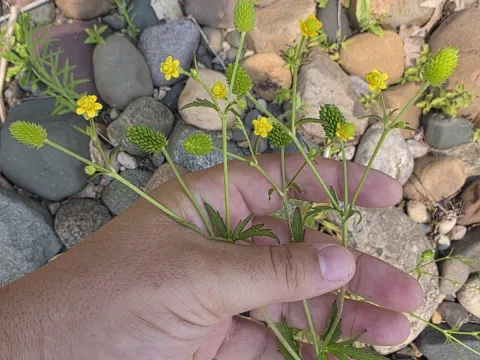
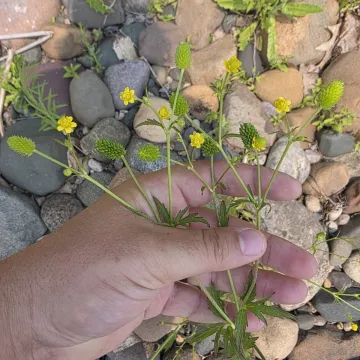
Botanically, the plant is characterized by an erect, hairy stem that can reach heights of 60–80 cm. The leaves are deeply divided and trifoliate. During the blooming season, the plant produces small yellow flowers, which later develop into distinct, cylindrical seed heads containing numerous achenes, facilitating efficient seed dispersal and propagation.
Agricultural management of the bristly buttercup relies on soil drainage and cultural control methods. Because it prefers saturated soil conditions, improving site drainage often reduces its competitiveness against desirable grasses. Regular mowing before seed set is critical to manage populations within grazing lands and agricultural pastures.
From an economic standpoint, the plant is of limited value and presents risks due to the presence of protoanemonin, a toxic compound found in fresh Ranunculus species. Consumption by livestock can cause blistering of the mouth and digestive irritation. While drying the plant in hay reduces its toxicity, it remains an undesirable component of high-quality forage.
- Scientific classification: Ranunculaceae.
- Preferred habitat: Wet and organic-rich soils.
- Reproductive strategy: High seed production.
- Toxicity: Contains protoanemonin.
- Management: Drainage and mechanical control.
Photo gallery