Pyrenean buttercup
Ranunculus pyrenaeus
Description
The Pyrenean buttercup (Ranunculus pyrenaeus) is a herbaceous perennial belonging to the Ranunculaceae family. Unlike many common buttercups, this species is specifically adapted to high-altitude ecosystems, making it a specialized choice for rock gardens and alpine-style landscapes.
Native to the mountainous regions of Europe, including the Pyrenees and the Alps, this plant naturally inhabits alpine meadows and rocky slopes. It has evolved to thrive in environments with short growing seasons, cold winters, and high precipitation during the spring and summer months.
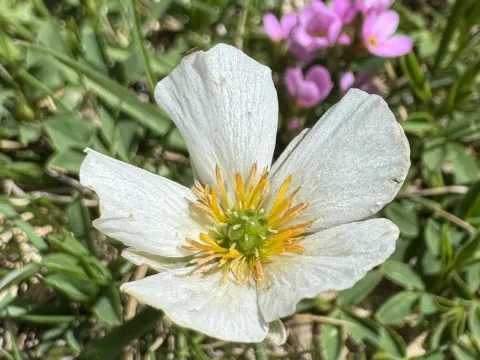
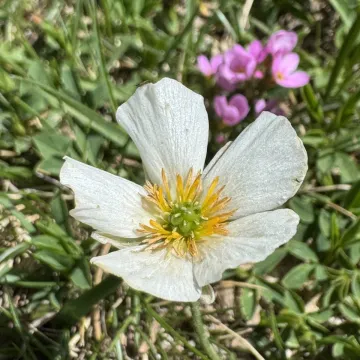
The plant features distinctively narrow, lanceolate foliage that forms a dense basal rosette. Its flowers are typically white, sometimes tinged with light yellow centers, held aloft on slender stalks. The plant structure is compact, which prevents damage from high-altitude winds and allows for efficient energy storage in its root system.
Cultivation requires conditions that mimic its natural habitat. It prefers cool, moist soils that are slightly acidic to neutral in pH. Adequate drainage is critical, as the plant cannot tolerate stagnant water, despite needing a consistent supply of moisture during the spring thaw and active growth phase.
In terms of agricultural and horticultural utility, it serves primarily as a decorative specimen for collector gardens. Pest management focuses on common garden threats such as aphids during early growth stages, while fungal infections are prevented by ensuring optimal air circulation around the plants and avoiding overhead irrigation in humid conditions.
Photo gallery