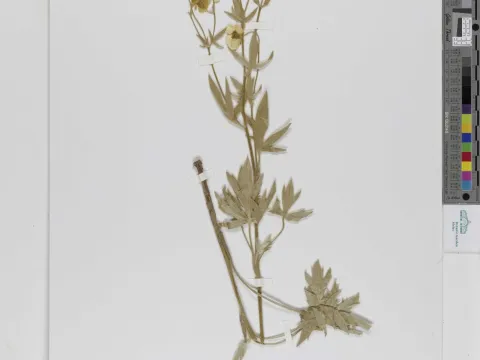
Silky buttercup
Ranunculus sericeus
Description
The Silky buttercup (Latin: Ranunculus sericeus) is a perennial herbaceous plant belonging to the Ranunculaceae family. The specific epithet "sericeus" refers to the fine, silky hairs covering the foliage, which give the plant a distinct silvery sheen and provide a functional mechanism for retaining moisture in its native high-altitude environment.
Originating from the mountainous regions of Southern Europe, this species is well-adapted to rocky, well-drained soils and fluctuating mountain temperatures. It thrives in alpine meadows where light intensity is high and water runoff is efficient, making it a specialized plant for specific ecological niches within its natural range.
Botanically, the plant forms a basal rosette of finely divided leaves. The flowers are typically bright yellow with a characteristic glossy texture typical of the buttercup genus. The roots are fibrous and require adequate oxygenation, which is why soil aeration is a critical factor for the healthy development of this species.
Cultivation requirements focus on mimicking its native habitat. Ranunculus sericeus demands sandy, gritty, and neutral-to-slightly-alkaline soil. Avoid waterlogged conditions at all costs, as the roots are prone to fungal rot if stagnant moisture persists. Planting in raised beds or rock gardens is highly recommended to ensure the necessary drainage profile.
In terms of usage, the plant is exclusively an ornamental species used in xeriscaping or rockery design. It is not considered an agricultural crop for consumption or livestock fodder due to the presence of secondary metabolites common in Ranunculaceae that can be toxic. Potential pests include aphids and mites, while fungal diseases such as downy mildew can occur if airflow around the foliage is insufficient.
Photo gallery