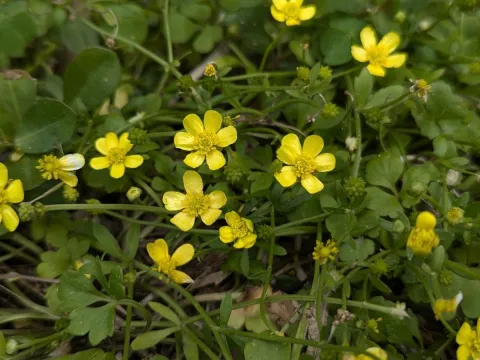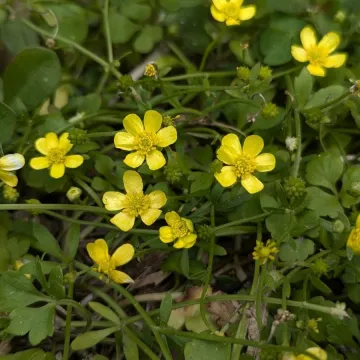
Ternate-leaved buttercup
Ranunculus ternatus
Description
The ternate-leaved buttercup (lat. Ranunculus ternatus) is a perennial herbaceous plant belonging to the Ranunculaceae family. It is known for its distinct foliage structure and modest size, making it an interesting subject for both botanical studies and ornamental cultivation in specialized garden settings.
The species originates from East Asia, particularly widespread in China and Japan. In its native habitat, it thrives in moist woodlands and near water bodies. Its cultivation as an ornamental plant has gained traction in regions with temperate climates where its ability to grow in shaded, moist environments is highly valued for landscaping damp garden areas.
Botanically, Ranunculus ternatus is characterized by its ternate leaves and a well-developed rhizomatous root system. The plant typically reaches heights of 30–40 cm and produces yellow, five-petaled flowers during its blooming season. The plant's structure allows it to form dense, ground-covering clumps, which are particularly useful for preventing soil erosion in shaded garden borders.
In terms of agricultural requirements, this plant prefers cool, semi-shaded locations with consistent soil moisture. It performs best in nutrient-rich, humus-heavy soils with excellent drainage. Growers must ensure the plant is never allowed to dry out completely, as its shallow root system is sensitive to water deficits. Applying organic compost in early spring significantly promotes vegetative development.
Regarding health, the plant is susceptible to pests such as aphids and mollusks, particularly during damp spring weather. Fungal diseases, such as powdery mildew, can occur if there is insufficient air circulation. Proper spacing during planting and diligent monitoring for signs of rot are essential for maintaining a healthy stand of these plants in a nursery or garden environment.
- Perennial growth habit.
- Preference for partial shade.
- Distinct ternate leaf structure.
- Rhizome-based propagation.
- Sensitivity to drought.
Photo gallery