Threadleaf water-crowfoot
Ranunculus trichophyllus
Description
Threadleaf water-crowfoot (Latin: Ranunculus trichophyllus) is a perennial aquatic herbaceous plant belonging to the Ranunculaceae family. Unlike many terrestrial plants in this genus, this species is fully adapted to submerged life, thriving in clean, stagnant, or slow-moving freshwater systems.
Its natural range covers the temperate regions of the Northern Hemisphere. The plant is typically found in shallow ponds, marshes, and irrigation channels where the water is nutrient-rich but clear enough to allow photosynthesis at depth. Its presence is often used as a bio-indicator of water quality.
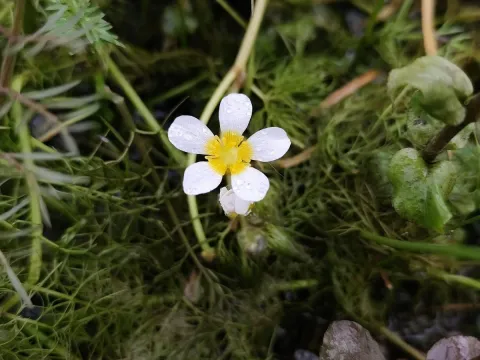
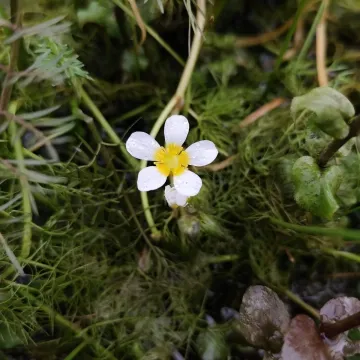
Botanically, the species is characterized by finely divided, hair-like leaves that are highly efficient at absorbing nutrients from the water column. Its stems are flexible and can grow quite long, while the small, white flowers emerge above the water surface during the flowering season to facilitate pollination, typically mediated by insects.
In terms of agricultural and environmental use, threadleaf water-crowfoot is valued for its ability to filter water, removing excess nitrates and phosphates. While not a traditional crop, it is managed in aquatic nurseries and artificial reservoirs to maintain ecological balance and improve water clarity for aquaculture operations.
Management of the plant requires careful monitoring of water chemistry and light conditions. Potential pests and diseases include various aquatic fungi and aphids that can attack emergent parts of the plant during the summer months. Proper cultivation involves preventing the excessive spread, which can otherwise impede water flow in irrigation channels.
Photo gallery