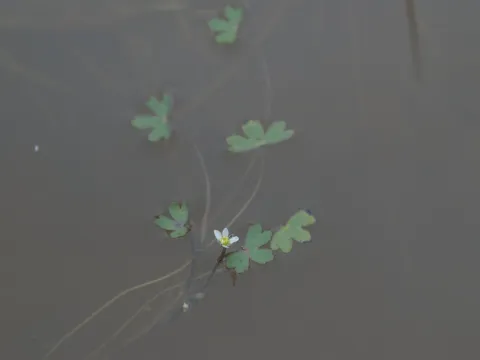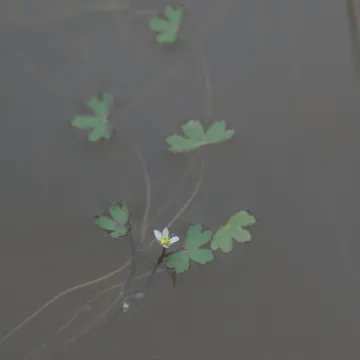
Three-lobed crowfoot
Ranunculus tripartitus
Description
Three-lobed crowfoot (lat. Ranunculus tripartitus) is a perennial herbaceous plant belonging to the Ranunculaceae family. This species is classified as a hydrophyte, adapted to living in wetland habitats, shallow waters, and periodically inundated areas. In agricultural contexts, it is primarily managed as a component of moisture-loving vegetation within pasture systems and drainage canal zones.
The natural range of this species extends across Western and Southern Europe, favoring temporary ponds, drainage ditches, and marshy lowlands. Its capacity to survive fluctuations in water levels makes it an excellent indicator species for assessing the hydrological stability of agricultural land. The plant is well-adapted to sandy, moist substrates common in coastal and reclaimed areas.
Botanically, the species is distinguished by its heterophyllous nature, exhibiting different leaf structures when submerged versus floating on the water surface. The stems reach 20–30 cm and readily root at the nodes, which facilitates efficient vegetative propagation. During the spring and early summer flowering period, the plant produces small white flowers that contribute to rapid colonization in favorable wet conditions.
Agronomic requirements are centered on maintaining adequate soil moisture levels. The plant requires consistently wet conditions and is intolerant of complete drought. In pasture management, it is important to note that, like many Ranunculus species, it contains protoanemonin. While usually ignored by livestock, high densities of the plant in grazing areas should be monitored to prevent digestive irritation in cattle or sheep.
The agricultural use of this plant is largely ecological and conservational. Key aspects include:
- acting as a bioindicator for wet soil management;
- strengthening turf on damp, waterlogged sites;
- supporting biodiversity within meadow ecosystems.
Photo gallery