Woodland buttercup
Ranunculus uncinatus
Description
Woodland buttercup (Ranunculus uncinatus) is a perennial herbaceous plant belonging to the Ranunculaceae family. This species is recognized for its preference for shaded, damp habitats and is a distinct member of the Ranunculus genus, which contains many diverse species adapted to varying climatic zones across the globe.
The native range of Ranunculus uncinatus is centered in North America, where it thrives in moist woodlands and riparian zones. Its natural habitat is characterized by cool temperatures and high humidity, which dictate the specific requirements for its cultivation. It serves as a biological indicator of healthy, nutrient-rich soil conditions in its native environments.
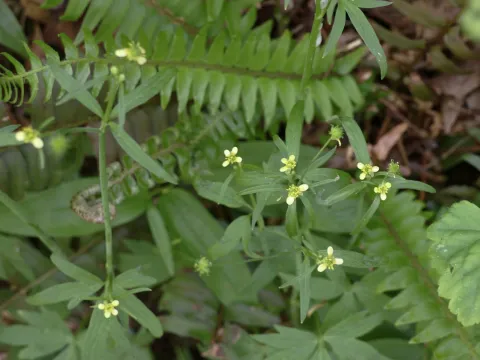
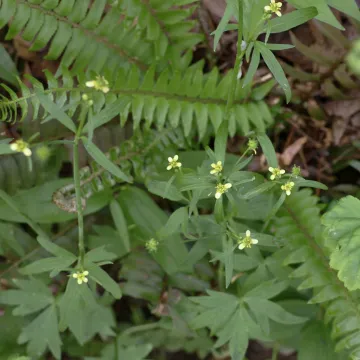
Botanically, the species is defined by its small flowers and fruit that bears hooked styles, giving the plant its specific epithet. The foliage is typically dissected, and the plant structure is adapted for competing in the understory of forest ecosystems. Understanding these developmental stages is crucial for anyone looking to maintain a population of this plant in an artificial landscape.
Agronomically, success with this species depends on mimicking its native forest floor environment. It requires consistent moisture levels, high organic matter content in the soil, and significant protection from direct sunlight. It is not suitable for typical field agriculture and is better suited for specialized botanical nurseries or restorative landscape gardening.
In terms of хозяйственное usage, Ranunculus uncinatus is primarily used for ecological restoration and as a botanical reference in scientific research. As with many members of the buttercup family, it contains compounds such as protoanemonin, which can cause skin irritation, thus limiting its use in landscaping where regular manual maintenance is required.
- Temperature requirements: thrives in cool, temperate climates.
- Moisture needs: requires constant, high soil moisture.
- Soil preference: humus-rich, well-drained loam.
- Pest management: monitor for aphids and fungal pathogens in humid conditions.
Photo gallery