Gray-headed Mexican hat
Ratibida pinnata
Description
Ratibida pinnata, commonly known as the gray-headed Mexican hat, is a robust perennial herb belonging to the Asteraceae family. This species is widely recognized for its unique structural appeal and its status as a foundational plant in North American prairie restorations, often utilized in modern landscape design for its ecological resilience.
The plant originates from the central and eastern parts of North America. Its natural habitat consists of open, dry prairies, limestone glades, and savanna margins. Because of its evolution in these environments, the species is highly adapted to significant fluctuations in climate, including extreme heat and cold winters, making it a reliable choice for various USDA hardiness zones.
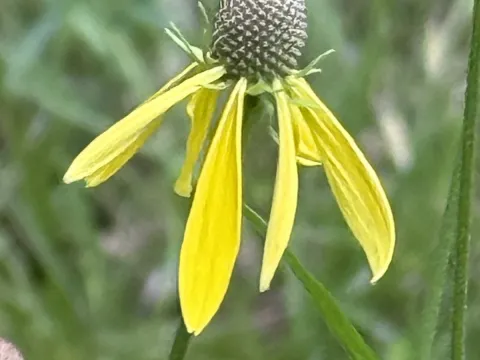
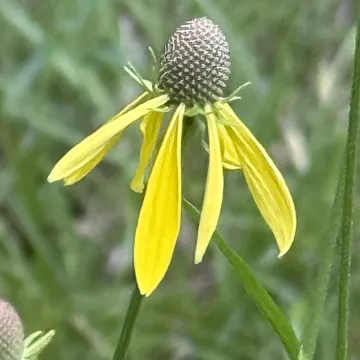
Botanically, Ratibida pinnata is characterized by its tall, sturdy stalks, which can grow up to 1.5 meters in height. Its foliage is notably pinnate, meaning it is deeply divided, giving the plant a light, airy texture. The inflorescence is the most distinctive feature: a tall, gray-to-brown cone-shaped center surrounded by drooping, vibrant yellow ray florets.
In terms of agronomy, the plant thrives in full sun and requires well-drained soil. It is particularly tolerant of rocky, sandy, or clay soils, provided they do not hold excessive water. Planting should be carried out in spring or autumn. Once established, the species requires very little supplemental irrigation, as it is inherently drought-tolerant.
- Superior drought tolerance once established.
- Excellent cold hardiness across multiple regions.
- Provides a high-quality habitat for native pollinators.
- Low maintenance requirements with no need for complex fertilization.
хозяйственном использовании, Ratibida pinnata is primarily grown for its ornamental value in wild-style gardens, meadows, and commercial landscaping. Its deep root system makes it an excellent candidate for erosion control on slopes and for stabilizing disturbed land. It is also a key species in biodiversity-focused agricultural projects.
Regarding pest and disease management, the plant is remarkably hardy. It rarely suffers from serious infestations. However, in environments with poor air circulation or consistently high humidity, it may develop powdery mildew. Monitoring for aphids during the early spring growth stage is recommended, though serious damage is rarely reported.
Photo gallery