Rebutia fiebrigii
Rebutia fiebrigii
Description
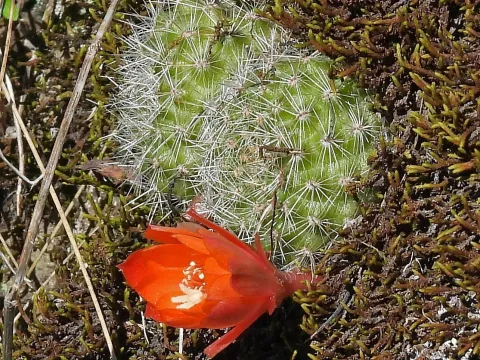
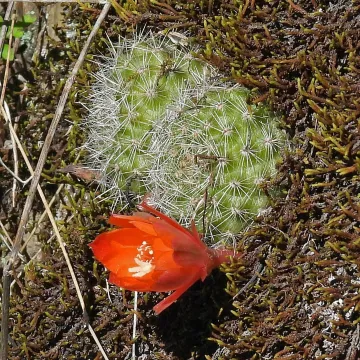
Rebutia fiebrigii is a perennial succulent plant belonging to the Cactaceae family. This species is widely recognized among cactus enthusiasts for its distinct compact growth habit and its spectacular display of flowers that emerge directly from the base of the stem.
The plant originates from the high-altitude mountainous regions of South America, specifically in Bolivia and Argentina. Its natural habitat consists of rocky, well-drained terrain where the climate is characterized by significant diurnal temperature fluctuations and high levels of ultraviolet light exposure, which the species has adapted to over millennia.
Botanically, the plant features a globular stem that becomes cylindrical with maturity. The body is densely covered in white or yellowish spines. A defining feature of Rebutia fiebrigii is its rapid transition to the flowering stage; it can produce a profusion of bright red to orange, funnel-shaped blossoms even while the plant is still relatively small.
In terms of agricultural requirements, the plant demands a highly porous, mineral-based growing medium with excellent drainage properties. It thrives in bright, filtered light and requires a strict watering regime where the soil is allowed to dry out completely between waterings. Providing a cool, dry winter dormant period is essential for successful seasonal flowering.
Typical issues encountered in cultivation include pests such as spider mites, which are prone to outbreaks in dry indoor environments, and mealybugs. Pathological threats are largely confined to root and crown rot, primarily caused by excessive moisture or inadequate substrate aeration. Maintaining a balance between light exposure and precise hydration is critical for the health of this cactus.
Photo gallery