
Barrelier's mignonette
Reseda barrelieri
Description
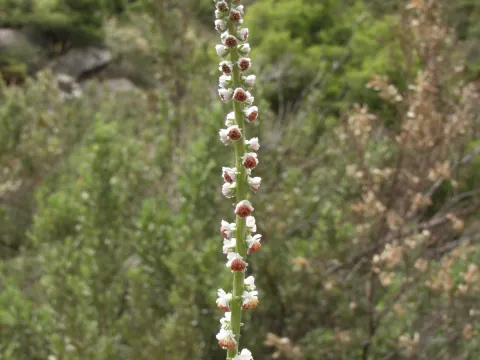
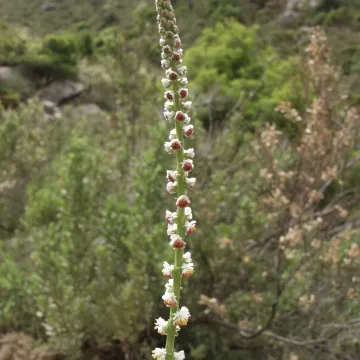
Barrelier's mignonette (Reseda barrelieri) is a herbaceous perennial plant belonging to the Resedaceae family. While not a mainstream industrial crop, it is of significant interest for botanical research, niche pharmaceutical production, and environmental restoration projects. The plant is characterized by a basal rosette of leaves and elongated racemes of small, distinct flowers.
The native range of this species is centered in the Mediterranean basin, covering parts of Southern Europe and Northern Africa. It typically thrives in arid, stony, and nutrient-poor environments, which has led to the development of robust physiological mechanisms for drought tolerance and efficient resource utilization.
Botanically, the plant features a deep taproot that allows it to access subsoil moisture. The foliage is typically dissected or lyrate, which helps to mitigate transpirational water loss. The inflorescence develops as a spire-like raceme, producing an abundance of flowers that are highly attractive to local pollinators, underscoring the ecological value of the species.
Agronomic requirements for Reseda barrelieri prioritize well-drained, alkaline to neutral soils. In cultivation, it is crucial to mimic its natural environment by providing full sun exposure and avoiding high-humidity areas where fungal issues might occur. Heavy fertilization is generally unnecessary and may even inhibit the plant's characteristic hardiness.
Key management practices for sustainable production include:
- Maintaining optimal soil drainage to prevent root rot.
- Prioritizing weed control during the early seedling stage.
- Implementing appropriate plant spacing to ensure airflow.
- Harvesting at the peak of floral maturity for best results.
Common pests include various coleopterans and lepidopteran larvae that target the foliage or developing seeds. Diseases such as powdery mildew or soil-borne pathogens are common when the plant is grown under high-moisture conditions. Proactive scouting and the use of integrated pest management (IPM) strategies are recommended to maintain high-quality stands of this specialized crop.
Photo gallery