Glaucous mignonette
Reseda glauca
Description
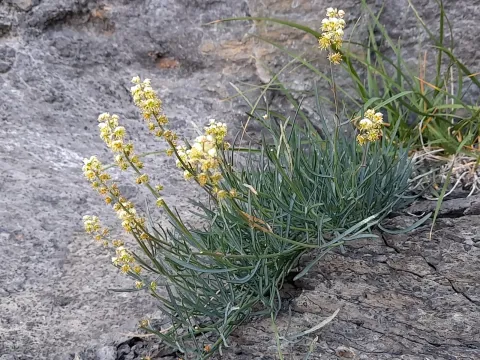
Glaucous mignonette (Reseda glauca) is a perennial herbaceous plant belonging to the Resedaceae family. This species is highly valued for its compact growth habit and distinct glaucous (bluish-grey) foliage. It is a specialized alpine plant that offers unique texture and visual appeal to rock garden collections.
The plant originates from the mountainous regions of the Iberian Peninsula. Its natural evolution in high-altitude environments has equipped it with a high tolerance for harsh, exposed conditions, poor soil quality, and intense solar radiation. It is considered a niche botanical interest, often sought after by rock garden enthusiasts and alpine plant collectors.
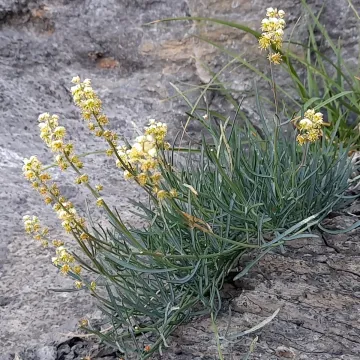
Botanically, Reseda glauca develops into a dense rosette of pinnatisect, blue-grey leaves. During the summer, it produces small, yellowish flowers arranged in racemes on erect stems. The foliage density combined with the slender spikes of flowers creates a striking contrast against the dark stones and gravelly substrates often used in alpine planting schemes.
For successful cultivation, attention to the following aspects is required:
- Excellent drainage is critical to prevent root rot during dormant months.
- Full sun exposure is necessary to maintain the plant's compact shape.
- Low-nutrient, alkaline soil mixes containing grit or stone chips are optimal.
Glaucous mignonette is primarily utilized for aesthetic purposes in rockeries, dry slopes, and crevice gardens. As a resilient mountain plant, it rarely suffers from major pest infestations, although aphids may occasionally appear during dry spells. Proper site selection and avoiding excessive humidity are the most effective strategies for maintaining healthy, vigorous plants in an agricultural or decorative setting.
Photo gallery