Reseda media
Reseda media
Description
Reseda media is a herbaceous plant species belonging to the Resedaceae family. While often found growing wild in Mediterranean regions, it possesses specific agronomic potential that makes it a subject of interest for specialized agriculture and ecological restoration projects.
The plant originates from the Mediterranean basin and surrounding areas of Europe. It is well-adapted to semi-arid environments and rocky terrains, demonstrating high physiological resilience to heat and water scarcity. This origin dictates its primary preference for well-drained habitats and open landscapes.
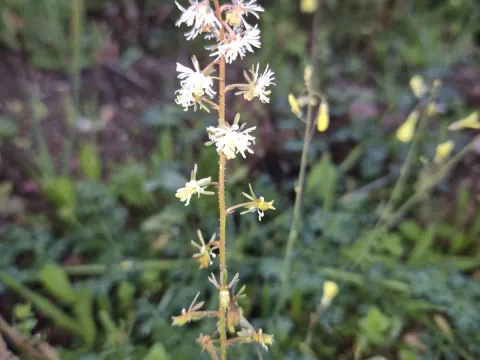
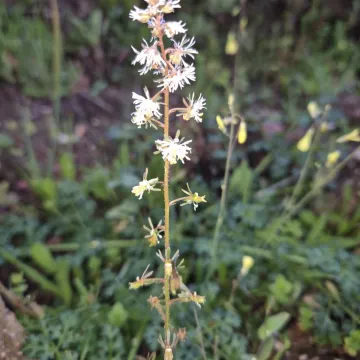
Botanically, Reseda media is characterized by a sturdy taproot and a rosette of leaves from which flowering stems arise. The plant produces dense, elongated racemes of small, fragrant flowers. Its growth habit is relatively compact, which allows it to thrive in dense stands without significant competition within the species.
Cultivation requirements for this crop focus on soil structure and exposure. It thrives best in calcareous soils with high mineral content and excellent drainage. Agronomic practices should include minimal irrigation during the establishment phase and ensuring the soil remains light, as waterlogging is a primary stress factor for the root system.
Economically, the plant is primarily valued as an excellent honey-producing crop, which supports local pollinator populations in agricultural settings. Additionally, it is being researched for its role in preventing soil erosion on sloping lands and its potential in the extraction of specific plant-based pigments for organic industrial uses.
Regarding health and protection, common issues include powdery mildew, which can develop during unseasonably wet seasons, and infestations by coleopteran pests. Regular scouting of the fields during the flowering period is recommended to prevent significant yield losses and to maintain the quality of the plant material.
Photo gallery