Reseda muricata
Reseda muricata
Description
Reseda muricata is an annual or biennial herbaceous plant belonging to the Resedaceae family. In the context of specialized agriculture, this species is identified as an important candidate for cultivation in arid and semi-arid environments where water availability is a major limiting factor for standard commercial crops.
The plant is native to the desert and semi-desert regions of North Africa, the Middle East, and parts of Western Asia. Its natural habitat includes sandy substrates, stony plains, and dry slopes, where it has evolved to thrive under conditions of intense heat and prolonged drought, making it highly resilient to harsh climatic variability.
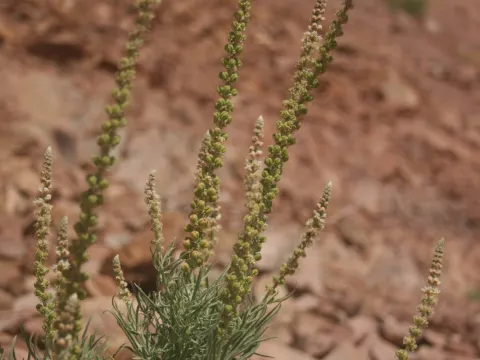
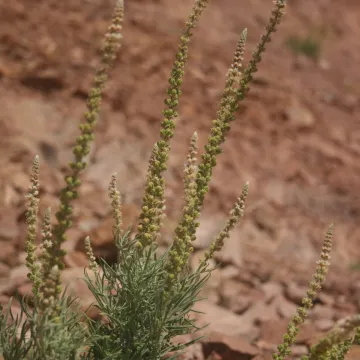
Botanically, Reseda muricata is characterized by a branched structure with narrow, often fleshy leaves and small flowers arranged in terminal racemes. The species is named for the distinctive muricate (prickly or roughened) surface of its fruit capsules. Its root system is significantly deep, enabling the plant to access moisture in environments where surface soil remains dry for the majority of the growing season.
Agronomic requirements are centered on well-draining, light-textured soils. It requires full sun exposure and is highly sensitive to waterlogging. Management practices include deep tillage to facilitate root penetration and careful density control to ensure each plant receives adequate soil nutrients. It is generally resistant to many standard agricultural pests but requires monitoring for soil-borne pathogens in humid conditions.
Economic and industrial utilization focuses on the potential to harvest specialized phytochemicals for the pharmaceutical and cosmetic industries. Furthermore, the species is being studied for its role in sustainable land management, specifically for the stabilization of sandy soils in desert margins to mitigate wind erosion and improve local ecological stability.
- Superior drought and heat tolerance.
- Adaptability to low-nutrient sandy soils.
- High potential for bioactive compound extraction.
- Role in soil conservation in desertified regions.
Photo gallery