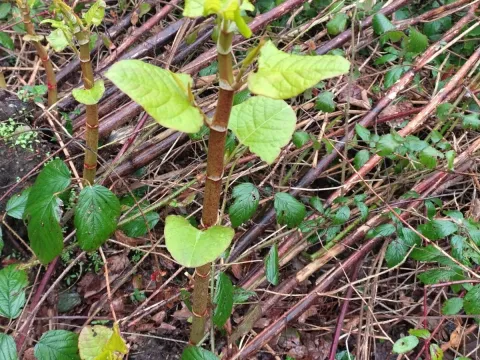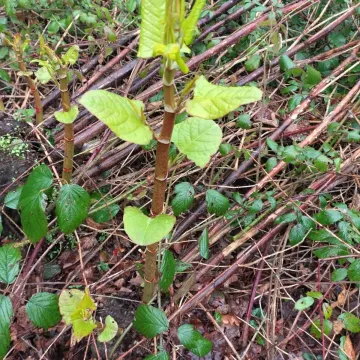
Uzen knotweed
Reynoutria uzenensis
Description
Uzen knotweed (Reynoutria uzenensis) is a perennial herbaceous plant belonging to the Polygonaceae family. As a specialized agricultural crop, it is recognized for its extraordinary vigor and high annual biomass yield. This species is closely related to the well-known Japanese knotweed but possesses distinct phenotypic traits that are relevant for targeted cultivation in temperate zones.
Native to Japan, specifically Hokkaido, the species has evolved in regions with consistent rainfall and temperate cycles. It is highly adaptable to a variety of soil types, provided that there is sufficient moisture during the active growing season. The plant thrives in well-drained but fertile soils, where its extensive root system can maximize nutrient uptake for rapid stem development.
Botanically, the plant is characterized by tall, sturdy, and hollow stems that grow rapidly during the spring and summer months. The root system consists of robust rhizomes that facilitate efficient vegetative propagation. The large, broad leaves optimize solar interception, contributing to the plant's high dry matter content, which is a critical factor for energy production applications.
Cultivation requires careful management, particularly regarding field preparation and nutrient application. Nitrogen fertilization is essential to support the massive vegetative growth observed during the height of the season. Given its competitive nature, the crop is typically grown in isolated plots to ensure efficient harvesting and to maintain control over its spread within the farm structure.
- High energy density for biofuel production.
- Sustainable source of green manure and compost.
- Potential for forage if processed appropriately.
- Effective for soil erosion control on steep slopes.
Management of pests and diseases in Uzen knotweed is generally straightforward due to its inherent hardiness. However, growers should monitor for specific aphids or fungal leaf spots during unusually humid periods. Strategic planting and maintaining proper plant spacing are recommended practices to ensure good airflow and to mitigate the risks associated with excessive moisture around the rhizome base.
Photo gallery