Rhabdoweisia crispata
Rhabdoweisia crispata
Description
Rhabdoweisia crispata is a perennial acrocarpous moss belonging to the family Rhabdoweisiaceae. While not a conventional agricultural crop, it is a significant species in botanical research and forest ecology, often serving as a key indicator of undisturbed, humid environments.
The distribution of this species spans the temperate zones of the Northern Hemisphere, particularly in mountainous regions. It is typically found in deep ravines, on shaded rock faces, and near cascading streams. The species requires a high-humidity environment and stable microclimatic conditions to thrive, often anchoring itself to nutrient-poor rock surfaces.
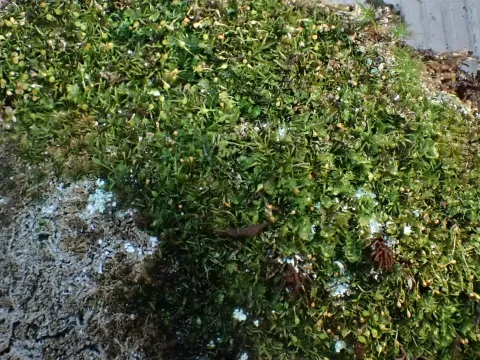
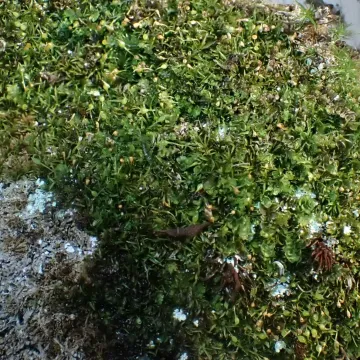
Botanically, Rhabdoweisia crispata forms dense, cushion-like turfs that are yellow-green in color. Its leaves are linear-lanceolate and possess the distinguishing trait of becoming strongly crispate (curled) when dry, a physiological adaptation to conserve moisture. The stems are usually simple or sparingly branched, providing a robust structure for survival in harsh mountain environments.
The environmental requirements for this moss include a constant supply of moisture and protection from intense solar radiation. In terms of conservation and ecological management, preserving the canopy cover in its native habitat is the primary technique for ensuring the species' survival. It does not require artificial soil or fertilization as it derives its nutrients directly from atmospheric moisture and mineral seepage from rocks.
The primary utility of Rhabdoweisia crispata lies in environmental biomonitoring. Because it is highly sensitive to sulfur dioxide and other industrial pollutants, its presence in a forest area is a clear sign of excellent air quality. Currently, there are no specific pests or diseases that threaten this moss, as it is well-adapted to its niche and faces competition mostly from other bryophytes and crustose lichens.
Photo gallery