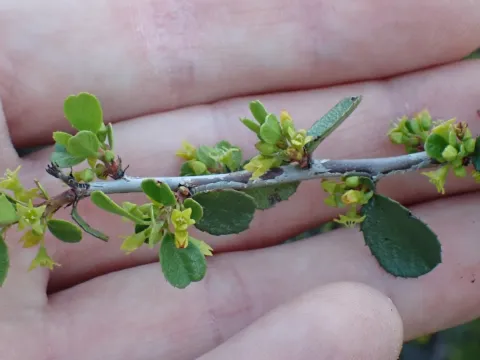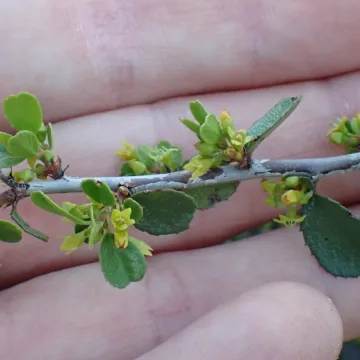
Hollyleaf buckthorn
Rhamnus crocea
Description
Hollyleaf buckthorn (Rhamnus crocea) is an evergreen shrub or small tree belonging to the Rhamnaceae family. It is recognized for its dense, glossy foliage and robust nature, making it a popular choice for sustainable gardening and xeriscaping projects in arid regions.
The native range of this species is primarily located in the southwestern United States, particularly in California. It thrives in chaparral habitats, rocky canyons, and mountain slopes, where it has evolved to withstand high temperatures and erratic rainfall patterns.
Botanically, Rhamnus crocea is characterized by small, stiff leaves with spines or jagged margins, earning it the common name "hollyleaf." The shrub produces tiny flowers followed by small, round, bright red berries that provide a vital nutrient source for native bird populations during the summer months.
Cultivation requirements focus on well-draining soils, ranging from sandy to rocky textures. In agricultural and landscaping practices, the species is praised for its minimal water needs once established. It thrives in full sun but can tolerate partial shade, provided the airflow is sufficient to maintain plant health.
The primary horticultural and ecological uses for this plant include:
- Serving as a durable, evergreen privacy screen or hedge.
- Controlling soil erosion on hillsides due to its complex root system.
- Promoting biodiversity by attracting local pollinators and birds.
- Requiring virtually no chemical fertilization or pruning to remain aesthetic.
Regarding health management, hollyleaf buckthorn is relatively pest-resistant. However, gardeners should watch for signs of fungal infections caused by excessive humidity or poor soil drainage. Maintaining dry, airy conditions and ensuring proper spacing between plants are the most effective strategies to prevent common infestations such as scale insects or aphids.
Photo gallery