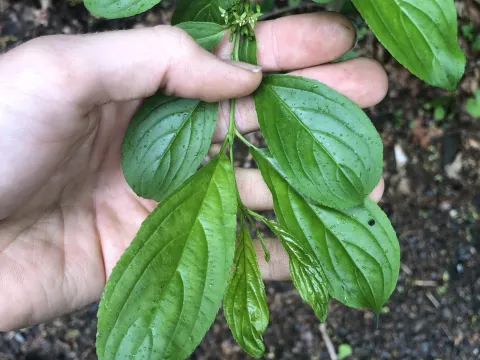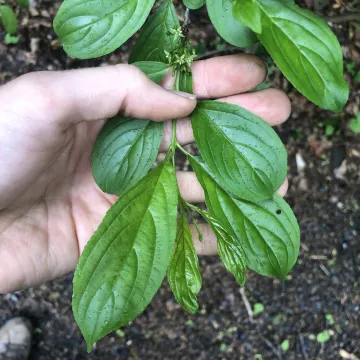
Dahurian buckthorn
Rhamnus davurica
Description
Dahurian buckthorn (Latin: Rhamnus davurica) is a deciduous shrub species belonging to the Rhamnaceae family. Recognized for its hardiness and versatility, this plant serves both agricultural and ornamental purposes, thriving in various ecological conditions across its native habitat in East Asia.
The species is primarily distributed throughout Northeast China, Korea, Mongolia, and the Russian Far East. It naturally colonizes riverbanks, forest edges, and shrublands, demonstrating a high tolerance for varying light levels and soil conditions. Its ability to grow in diverse environments makes it a reliable choice for conservation and land restoration projects.
Botanically, it is defined by its thorny branches and dense, dark green foliage. The plant reaches moderate heights, typically between 3 and 5 meters, with a spreading crown. Its fruit, appearing as small, rounded drupes, turns black upon maturation and contains active compounds that are highly valued in the production of traditional and modern pharmaceutical laxatives.
Successful cultivation requires minimal intervention once the plant is established. It prefers well-drained, fertile soil but demonstrates resilience in poorer substrates. Essential agricultural practices include proper spacing during planting, occasional pruning to maintain plant health and shape, and ensuring adequate hydration during the initial stages of root development in the spring.
The primary utility of Dahurian buckthorn lies in the medicinal sector, where both bark and berries are harvested for their therapeutic properties. Additionally, the plant's robust nature allows it to be used for windbreaks and hedges, which stabilize soil and prevent erosion. Disease management is relatively straightforward, focusing on monitoring for aphids and fungal infections, which are easily mitigated through conventional pest management techniques.
Photo gallery