Pallas buckthorn
Rhamnus pallasii
Description
Pallas buckthorn (Rhamnus pallasii) is a deciduous shrub belonging to the Rhamnaceae family. Known for its remarkable hardiness, it serves as a valuable plant for ecological restoration and ornamental landscaping. In agricultural terms, it is considered an undemanding crop that can survive in challenging environments where other vegetation fails to establish.
The native range of this species extends across the arid and semi-arid zones of Eurasia, specifically in Central Asia, the Caucasus, and parts of Southern Siberia. It is well-adapted to steppe climates and rocky terrain. The plant demonstrates high tolerance to drought, heat, and poor soil conditions, making it an excellent candidate for regions with scarce rainfall.
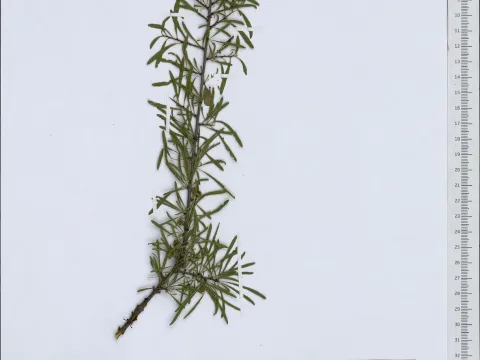
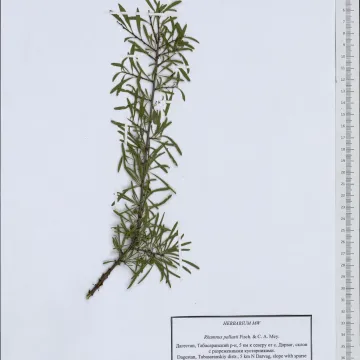
Botanically, Pallas buckthorn is a densely branched shrub reaching up to 2 meters in height. A distinctive feature is the presence of spines at the ends of its twigs, which provide protection against grazing animals. The leaves are leathery, elliptic, and arranged alternately along the stems. During the spring, it produces small, inconspicuous flowers, followed by dark, berry-like drupes that ripen in late summer.
Agricultural practices for this shrub are relatively simple. It thrives in full sun and requires well-drained soil, though it is notably tolerant of alkaline and calcareous substrates. Propagation is typically achieved through seeds or cuttings. Once established, the plants require minimal intervention, with occasional pruning needed to maintain shape or density in hedges.
The primary areas of economic utilization include:
- Extraction of natural dyes from the bark and fruits.
- Establishment of impenetrable thorny hedgerows.
- Soil stabilization and erosion control in arid ecosystems.
- Limited use in botanical preparations and traditional research.
Common phytopathological issues include powdery mildew, particularly in areas with high humidity or poor air circulation. Pests such as aphids may occasionally infest new growth during the spring season. Proper spacing between individual plants is the most effective cultural practice to prevent disease spread and ensure healthy development throughout the growth cycle.
Photo gallery