Chinese buckthorn
Rhamnus utilis
Description
Chinese buckthorn (Rhamnus utilis) is a deciduous shrub or small tree belonging to the Rhamnaceae family. It is a hardy plant known for its versatility and historical importance. Cultivated both for ornamental purposes and for its chemical components, it remains a plant of interest for agricultural researchers and botanists alike.
The native range of the species covers various regions in East Asia, primarily China and Japan. It thrives in diverse habitats, ranging from wooded hillsides to mountainous areas. When introduced to agricultural settings, it demonstrates high adaptability, provided that the soil is well-drained and the climatic conditions allow for moderate growth temperatures.
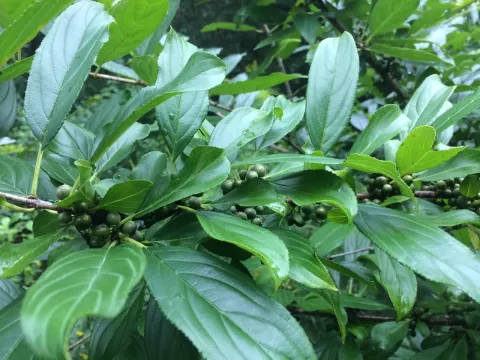
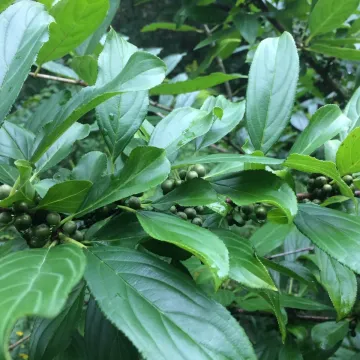
Botanically, Rhamnus utilis features dense, branching structures and glossy, elliptical leaves. The flowers are inconspicuous, developing into small, dark-colored drupes upon maturity. Its root system is extensive, which contributes to the plant's overall resilience in various soil textures and aids in soil stabilization projects.
Agricultural practices for successful cultivation involve selecting suitable sites with fertile, well-draining soil. The plant responds positively to full sun to partial shade. Proper maintenance, including pruning and moisture management, ensures robust growth. Key requirements include:
- Providing adequate space for crown expansion.
- Applying balanced fertilizers during the early growing season.
- Monitoring soil pH levels to maintain optimal acidity.
- Regular inspection for signs of water stress or nutrient deficiency.
The economic value of Chinese buckthorn is diverse. Historically, it has been a significant source of green dyes extracted from the berries, which were used in textile industries. In modern times, the bark is valued for its potential in herbal medicine. Furthermore, its ability to grow in various conditions makes it an excellent choice for environmental landscape restoration.
The plant is occasionally susceptible to pests such as aphids or leaf-feeding insects. Fungal infections, typically triggered by high humidity or poor air circulation, can affect foliage health. Integrated pest management, including natural predators and selective pruning to improve airflow, is recommended for maintaining a healthy and productive crop.
Photo gallery