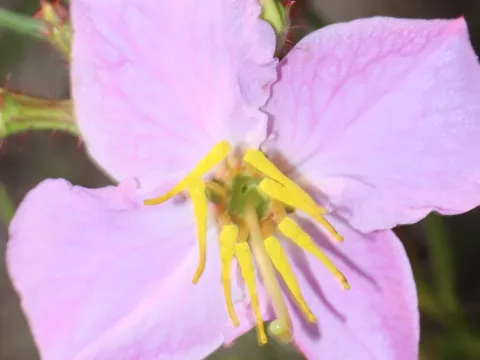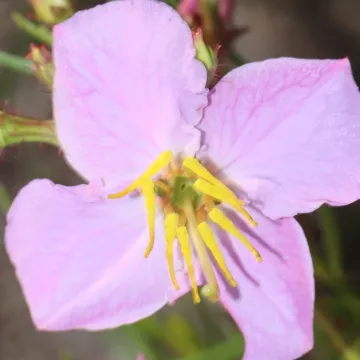

Maryland meadow beauty
Rhexia mariana
Description
Maryland meadow beauty (Rhexia mariana) is a perennial herb belonging to the Melastomataceae family. It is recognized for its unique aesthetic properties and is frequently utilized in specialized horticultural practices, particularly in gardens that feature moisture-loving plant collections and restoration of native habitats.
The species originates from North America, specifically distributed throughout the eastern and southeastern United States. It naturally inhabits wetlands, sandy bogs, and damp meadows. Because of its native origin in wet environmental conditions, the cultivation of this species requires a deep understanding of its hydro-ecological needs to ensure survival and optimal growth.
Botanically, Rhexia mariana is defined by its four-angled, erect stems and opposite, lanceolate leaves. The plant reaches a moderate height, typically bearing brilliant pink or magenta four-petaled flowers. The presence of prominent, bright yellow anthers serves as a key identifying characteristic that makes the bloom highly sought after for ornamental displays.
Successful agricultural management of this crop involves maintaining specific soil conditions, notably high acidity and consistent moisture levels. It thrives in loamy or sandy substrates enriched with organic matter. Growers should aim for locations that receive full sun for a significant portion of the day, as insufficient light often results in leggy growth and reduced flowering intensity.
In terms of хозяйственного (horticultural) usage, it is primarily used in water gardening and rain gardens. To maintain plant health, it is essential to monitor for pests and environmental stressors. Typical management concerns include:
- Managing soil drainage to prevent fungal root rot issues.
- Providing supplementary watering during dry spells to prevent wilt.
- Monitoring for aphid infestations during the rapid growth phase of the season.
Photo gallery