Greater yellow-rattle
Rhinanthus alectorolophus
Description
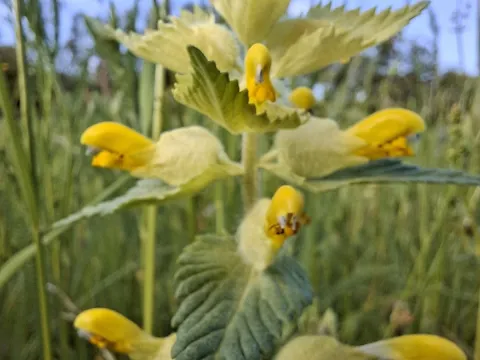
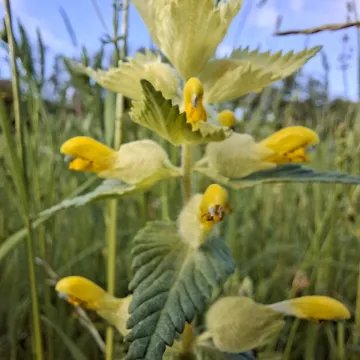
The greater yellow-rattle (Rhinanthus alectorolophus) is an annual herbaceous plant belonging to the Orobanchaceae family. It is recognized in agriculture and ecology as a hemiparasite, meaning it derives some of its nutrients and water by tapping into the root systems of neighboring grasses using specialized organs called haustoria.
Its natural range extends across much of Europe and temperate Asia. The species typically thrives in meadows, pasture lands, and mountain slopes. It favors open, well-lit habitats with sufficient soil moisture, where it can easily find suitable host grasses to support its growth cycle.
The plant features an upright stem ranging from 20 to 60 centimeters in height, adorned with opposite, serrated leaves. The flowers are arranged in spikes and are distinguished by a bright yellow color and a comb-like bract. Once the seeds mature, they become loose within the seed capsule, creating a characteristic rattling sound when shaken by the wind, which gives the plant its common name.
Regarding agrotechnical requirements, the success of this plant is strictly dependent on the presence of host species. In controlled agricultural settings, the soil should be well-drained and relatively fertile. For farmers aiming to manage or reduce its population, it is crucial to mow the vegetation before the seeds ripen, typically before the end of July, to break the reproductive cycle.
In modern agricultural practices, the greater yellow-rattle is increasingly used as a management tool for grassland restoration. By weakening competitive, aggressive grass species, it creates space for less dominant wildflower species, thereby increasing the biodiversity of the meadow. It is not traditionally cultivated as a crop, but rather managed as a functional component of specific agricultural landscapes.
Common pests and diseases include various fungal infections, such as rusts, particularly in regions with high humidity or poor soil drainage. While it is rarely targeted by agricultural pests, its growth can be inhibited by excessive trampling by livestock. Its classification as a weed depends entirely on the land use objectives: it is a beneficial tool in conservation biology but a productivity threat in hay-producing grass crops.
Photo gallery