Dwarf yellowrattle
Rhinanthus pumilus
Description
Dwarf yellowrattle (Rhinanthus pumilus) is a small annual herbaceous plant belonging to the Orobanchaceae family. It is recognized as a hemiparasite, meaning it can photosynthesize but relies on attaching its root system to host plants—typically various grasses—to extract mineral nutrients and water, which facilitates its growth in competitive meadow environments.
The plant originates from the mountainous regions of Europe, specifically thriving in alpine and subalpine habitats. Its range is primarily restricted to high-altitude meadows and rocky slopes. Because of its specific ecological niche, it is rarely cultivated as a commercial crop but is highly significant for the maintenance of biodiversity in permanent grasslands.
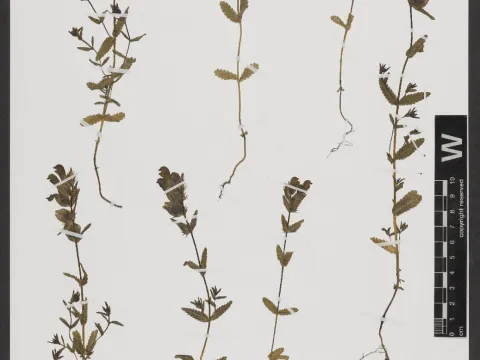
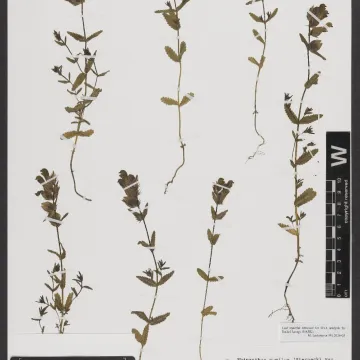
Botanically, it is defined by its compact size and distinct floral structure. The stem is upright, carrying opposite leaves. The flowers are yellow and enclosed in a characteristic inflated calyx, which, when dry, creates a rattling sound as the seeds mature and detach inside. This mechanism is an evolutionary adaptation for efficient seed dispersal in windy high-altitude environments.
Regarding cultivation requirements, Rhinanthus pumilus demands well-drained, nutrient-poor to moderately nutrient-rich soils with sufficient light exposure. It requires minimal human intervention, focusing on the preservation of host grass species that support its parasitic life cycle. Regular, low-intensity mowing schedules are essential to prevent competition from taller, more aggressive herbaceous species that could shade it out.
Its primary agricultural use is as a management tool for grassland restoration and species-rich meadow development. By limiting the growth of dominant grasses, it creates gaps in the turf, allowing less competitive wildflowers to establish and flourish. Typical pests and diseases include root-rotting fungi in waterlogged conditions and certain specialist insects that feed on the developing seed pods, though these rarely cause catastrophic failure in established populations.
Photo gallery