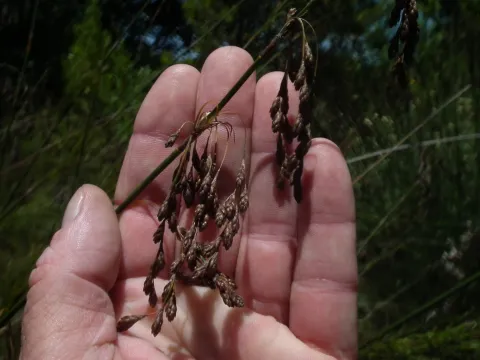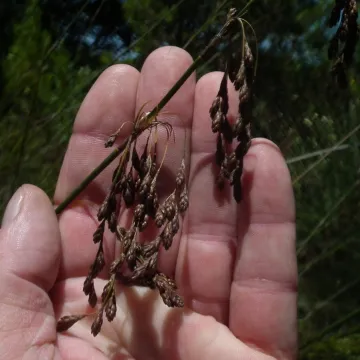
Rhodocoma gigantea
Rhodocoma gigantea
Description
Rhodocoma gigantea is a prominent species within the Restionaceae family, native to the Western Cape of South Africa. Often referred to as a giant restio, this perennial plant is highly prized by garden enthusiasts for its striking, bamboo-like appearance and its ability to provide strong structural interest in diverse horticultural settings.
The plant originates from regions characterized by a Mediterranean climate, where it has evolved to thrive in well-drained, nutrient-poor soils. Its natural habitat includes coastal slopes and mountain fynbos, meaning the plant is well-adapted to environments that experience wet winters and relatively dry, temperate summers.
Botanically, this species is defined by its tall, jointed stems that grow from a hardy rhizome. Unlike typical grasses, the leaves of Rhodocoma gigantea are reduced to sheaths, making the stems the primary photosynthetic organs. This morphology allows the plant to conserve significant amounts of water while maintaining its robust physical presence.
Cultivation requirements necessitate a focus on soil quality and drainage. It performs best in acidic, sandy soils and requires a position that receives full sun or partial shade. Over-watering should be avoided, especially in cooler temperatures, as this can easily induce fungal pathogens and root decay. Proper spacing is essential to encourage air circulation and prevent typical diseases.
In terms of хозяйственного использования, the plant serves primarily as an ornamental specimen. Its durability makes it an excellent choice for modern landscape architecture, particularly in areas where water conservation is prioritized. Beyond its aesthetic value, it acts as a resilient buffer plant that requires minimal chemical pest control or intensive maintenance throughout the growing season.
Photo gallery