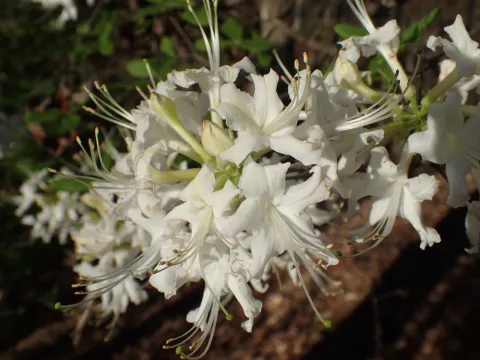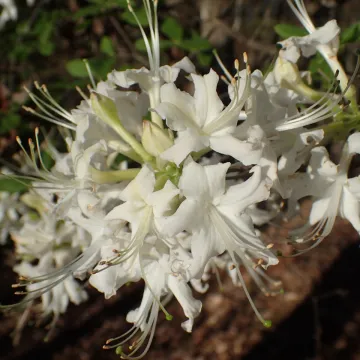
Alabama azalea
Rhododendron alabamense
Description
Alabama azalea (Rhododendron alabamense) is a deciduous shrub belonging to the Ericaceae family. Native to the southeastern United States, particularly Alabama, this plant thrives in woodland margins and well-drained slopes, recognized for its exceptional floral fragrance.
Botanically, it is an upright shrub that typically grows between 1 to 3 meters in height. The plant produces terminal clusters of white or pink-tinged funnel-shaped flowers, which are distinguished by a yellow blotch on the upper lobe, making it a sought-after ornamental species for botanical gardens.
The cultivation requirements for this species are specific: it necessitates acidic soil (pH 4.5–5.5) that is rich in organic matter. A well-drained substrate is crucial, as the shallow root system is highly susceptible to root rot if the soil remains waterlogged for extended periods.
- Requires partial shade for optimal health.
- Prefers cool, moist soil conditions.
- Benefits from pine needle mulch to maintain acidity.
- Needs protection from drying winter winds.
Agricultural practices involve regular fertilization with balanced fertilizers for acid-loving plants during the spring season. Pruning should be kept to a minimum, performed only after flowering, to shape the plant and remove dead wood, ensuring better airflow within the canopy.
Common plant health issues include chlorosis, often caused by high soil pH, and fungal diseases like leaf spot or powdery mildew. Integrated pest management, focusing on proper spacing and appropriate moisture control, is key to preventing infestations of mites and scale insects.
Photo gallery