Albrecht's rhododendron
Rhododendron albrechtii
Description
Albrecht's rhododendron (Rhododendron albrechtii) is a deciduous shrub belonging to the Ericaceae family. It is highly prized by ornamental gardeners for its early and prolific spring display, which transforms the garden before most other plants have even begun their growing season.
Native to the mountain regions of Japan, specifically the island of Honshu, this species thrives in cool, temperate environments. It is a slow to moderate growing plant, typically reaching a height of about 1.5 to 2 meters. Its natural habitat dictates its specific cultivation requirements, favoring locations that mimic its forest mountain origin.
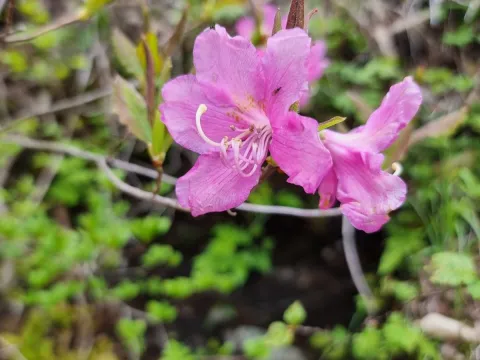
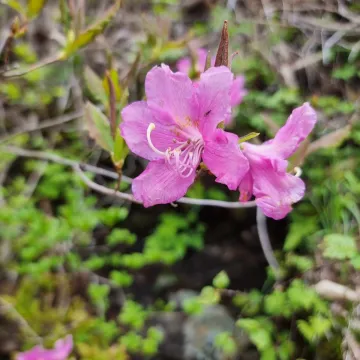
The plant is botanically distinct due to its large, vibrant rose-purple, wide-bell-shaped flowers that appear before the foliage fully develops. The leaves are arranged in whorls at the ends of the branches, and the plant provides a second season of interest in autumn, when the foliage turns brilliant shades of yellow, orange, and red.
To cultivate Rhododendron albrechtii effectively, one must provide acidic, well-draining soil rich in organic matter. It performs best in partial shade, as full sun can burn the leaves and dry out the shallow root system. Regular mulching is essential to maintain moisture and soil acidity, which is critical for the nutrient uptake of this Ericaceous shrub.
Maintenance involves managing common pests like the rhododendron bug and spider mites, which can disfigure the leaves if left untreated. Disease management focuses primarily on preventing fungal issues such as leaf spot and root rot, which are often consequences of improper drainage or poor air circulation. Proper site selection is the best preventative measure against these threats.
Photo gallery