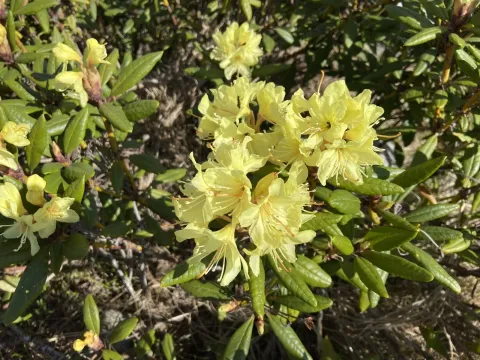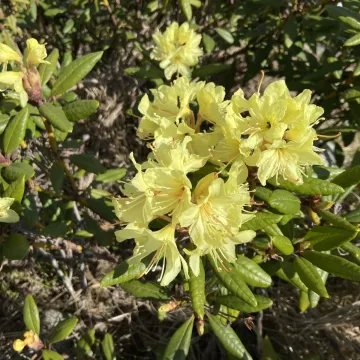
Golden Rhododendron
Rhododendron aureum
Description
Golden Rhododendron (Rhododendron aureum) is a perennial evergreen shrub belonging to the Ericaceae family. It is a slow-growing, low-lying plant well-adapted to harsh mountainous environments. Its resilience to cold and unique morphological structure makes it a specialized subject for horticultural enthusiasts interested in alpine flora.
The native habitat of Rhododendron aureum includes subalpine and alpine regions across Siberia, the Russian Far East, Japan, and parts of China. It typically grows on rocky slopes and moss-covered terrains near the timberline. In cultivation, it thrives best when these climatic conditions, including high humidity and acidic, well-drained soil, are carefully replicated.
Botanically, the plant is recognized by its thick, leathery, elliptic leaves and clusters of striking, bell-shaped, golden-yellow flowers. Due to its slow growth rate, the plant requires patience and precise maintenance. It is a highly specialized species that does not tolerate environmental stress, particularly excessive heat or waterlogging during the summer months.
Agronomic success relies on soil chemistry. The substrate must be highly acidic, rich in organic matter, and provide excellent drainage to prevent root rot. It is recommended to use a mix of pine needles, peat, and sand. Partial shade is essential, especially in areas with hot summer climates, to prevent leaf scorching and excessive transpiration.
Beyond its ornamental value in rock gardens and landscapes, Rhododendron aureum has historical significance in traditional medicine. Its leaves contain pharmacologically active compounds, including tannins and glycosides, which have been studied for their potential cardiovascular and anti-inflammatory effects. However, it should only be used under professional guidance due to the toxicity of certain compounds.
- Maintain constant soil acidity (pH 4.5–5.5).
- Use mulch to prevent moisture loss from the root zone.
- Apply specialized fertilizers intended for acid-loving ericaceous plants.
- Ensure air circulation to prevent fungal infestations.
- Monitor for spider mites and rhododendron bugs during hot spells.
Pests and diseases pose a major risk to this plant. Spider mites and leaf-feeding insects can quickly damage the foliage, while fungal pathogens like powdery mildew are common in high-humidity conditions with poor airflow. A preventive program involving regular inspections and appropriate fungicides is necessary to ensure the health and longevity of the shrub in a garden setting.
Photo gallery