Rhodora
Rhododendron canadense
Description
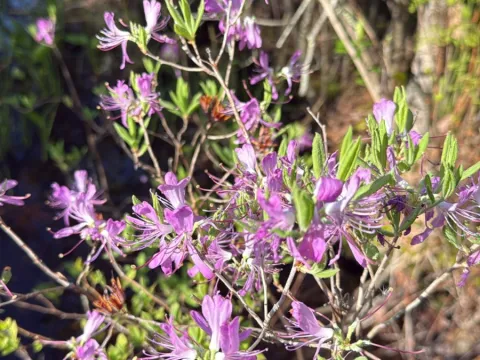
Rhododendron canadense, commonly known as rhodora, is a deciduous shrub belonging to the Ericaceae family. It is a distinctive member of the azalea subgenus, valued by gardeners primarily for its early spring display of striking flowers that emerge before the foliage appears on the woody stems.
Native to northeastern North America, specifically Canada and the northeastern United States, this species has evolved to thrive in cool, moist habitats. It is naturally found in bogs, damp meadows, and rocky outcroppings, demonstrating a strong preference for acidic soils and cool ambient temperatures throughout the growing season.
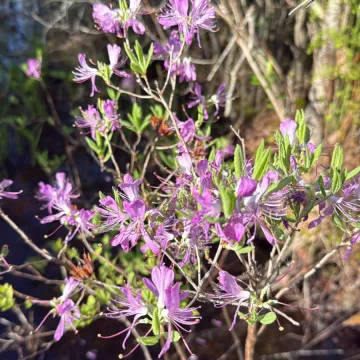
Botanically, the plant remains relatively compact, typically reaching heights between 0.5 and 1 meter. Its leaves are elliptical with a soft, hairy texture on the underside. The flowers are arguably its most unique feature, possessing a specialized shape with long, narrow, and deeply cleft petals, usually displaying shades of light purple to vibrant magenta.
Cultivation of Rhododendron canadense requires strict adherence to environmental needs. The plant demands a highly acidic growing medium (pH between 4.0 and 5.5) and excellent drainage. It is essential to maintain consistent soil moisture through mulching with organic materials such as pine needles, which simultaneously helps to preserve the required soil acidity level.
- Exceptional cold hardiness, surviving temperatures well below freezing.
- High sensitivity to alkaline soil conditions and hard water.
- Requires a site with dappled shade or protection from intense afternoon heat.
- Needs minimal pruning, focusing only on removing dead or crossing branches.
- Susceptibility to iron chlorosis if soil pH is not maintained.
In terms of хозяйственного (ornamental) usage, it is an ideal candidate for woodland gardens, peat beds, and ecological landscape projects. Pests such as azalea lace bugs can occasionally affect the foliage, while root rot caused by stagnant water remains the primary concern for growers. Proper site preparation is the key to ensuring long-term health and vigor.
Photo gallery