Piedmont azalea
Rhododendron canescens
Description
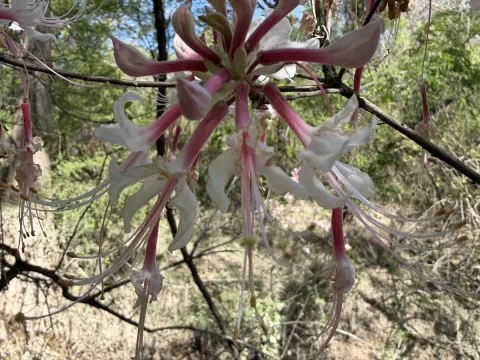
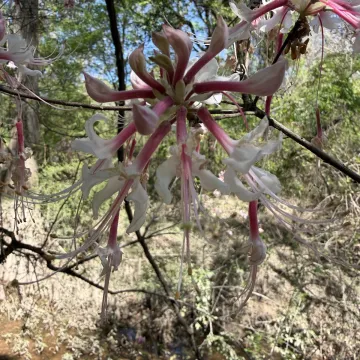
The Piedmont azalea (Rhododendron canescens) is a deciduous shrub belonging to the Ericaceae family. It is highly valued in horticulture for its spectacular, fragrant, pink-to-white tubular flowers that bloom in early spring. This species is often referred to as one of the most attractive native azaleas due to the visual impact of its floral display before foliage development.
Native to the southeastern United States, this species is typically found in moist woodlands, stream banks, and swampy edges. Its natural habitat indicates a strong preference for high environmental humidity and stable soil moisture. It is well-adapted to the climatic conditions of temperate regions where it can thrive in sheltered forest-like environments.
Botanically, Rhododendron canescens is characterized by hairy branches and leaves, hence its specific epithet. The plant usually grows as a multi-stemmed shrub, sometimes reaching a height of 3 to 5 meters. Its foliage provides a pleasant seasonal interest, turning into rich shades in the autumn before dropping.
Successful cultivation requires specific agronomic practices: acidic soil with a pH between 4.5 and 5.5, excellent drainage, and high organic matter content. Regular irrigation is crucial, especially during dry spells, to maintain soil moisture without causing root rot. The plants perform best in filtered sunlight or partial shade provided by larger trees.
Common issues in the management of this crop include sensitivity to extreme drought and susceptibility to fungal pathogens if drainage is inadequate. Pests such as azalea lace bugs and spider mites are frequent threats that require timely integrated pest management (IPM). With proper site selection and soil preparation, the Piedmont azalea remains a robust and long-living ornamental asset.
Photo gallery