Rhododendron eximium
Rhododendron eximium
Description
Rhododendron eximium is a highly ornamental evergreen shrub or small tree belonging to the Ericaceae family. Known for its majestic habit and exceptional foliage, it is recognized by its large, thick leaves covered in a distinct indumentum, which gives the plant a rusty, textured appearance that is highly sought after by collectors.
The native habitat of this species is found in the high-altitude regions of the Eastern Himalayas, specifically within Bhutan and parts of India. Cultivating this plant requires replicating these mountainous conditions, which involve cool summers, high atmospheric humidity, and consistent moisture, as it does not tolerate arid or excessively hot climates.
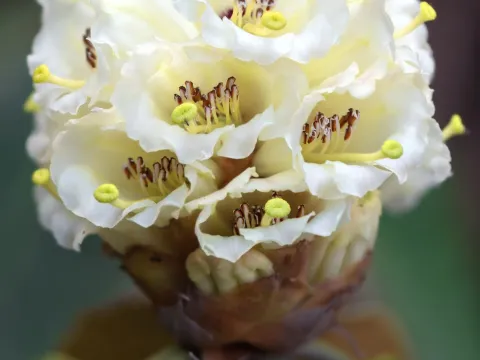
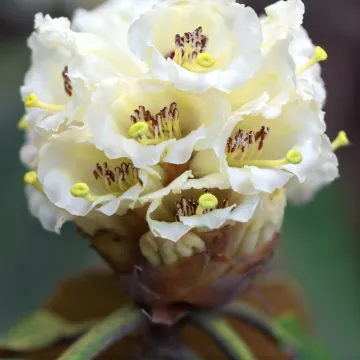
Botanically, the plant is slow-growing and produces large, showy trusses of flowers that range from white to various shades of pink. Its foliage remains an essential structural element in gardens throughout the year, provided that the plant is protected from harsh, drying winds that can damage the leaf margins.
Agronomic requirements are centered on soil quality; the plant strictly requires well-drained, acidic soil rich in organic matter, such as leaf mold or peat. Careful attention to root zone management is critical, as the fibrous, shallow roots are prone to damage from drought as well as waterlogging.
Horticultural use is primarily decorative in private estates and botanical gardens. While relatively robust, the plant can be susceptible to common rhododendron issues if cultural practices are neglected:
- Powdery mildew under stagnant air conditions.
- Phytophthora root rot caused by poor soil drainage.
- Chlorosis resulting from a lack of soil acidity.
Photo gallery