Rhododendron hodgsonii
Rhododendron hodgsonii
Description
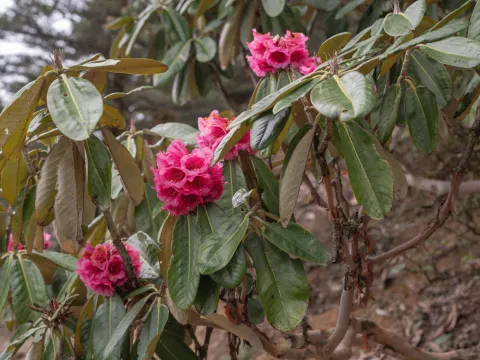
Rhododendron hodgsonii is a magnificent evergreen shrub or small tree belonging to the Ericaceae family. Renowned for its bold, oversized foliage and striking floral displays, this species is a prized specimen for temperate gardens. In its native habitat, it can develop a substantial woody structure, making it one of the most distinctive members of the genus due to its architectural presence.
The species is native to the high-altitude regions of the Himalayas, including Nepal, Bhutan, and northeastern India. It thrives in cool, humid, and misty mountain environments. Because of these origins, its successful cultivation requires a climate that mimics these conditions, specifically focusing on protection from extreme heat and dry air, which the plant does not tolerate well.
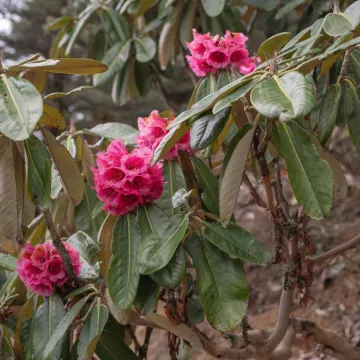
Botanically, Rhododendron hodgsonii is characterized by its large, leathery leaves, which can reach up to 40 centimeters in length. The underside of the foliage often features a persistent tomentum, appearing silvery or rust-colored. During the blooming season, usually in spring, the plant produces large, truss-like clusters of bell-shaped flowers, which typically range in color from shades of mauve to deep purple or pink.
Cultivation requires adherence to specific horticultural practices, starting with the need for acidic, well-draining, and organic-rich soil. Mulching is essential to keep the shallow root system cool and moist throughout the growing season. The plant performs best in filtered light or partial shade, as exposure to harsh afternoon sun can lead to leaf scorching and physiological stress.
- Consistent irrigation with lime-free, soft water.
- Annual application of fertilizer designed for acid-loving plants.
- Sanitation by removing spent blooms and dead wood.
- Winter protection in regions prone to heavy frost.
The primary use of this species is ornamental, serving as a focal point in landscape design or within specialist ericaceous collections. Its massive leaves provide a tropical appearance, making it highly desirable for gardeners aiming to create woodland gardens or sheltered, semi-shaded displays. When placed correctly, it adds significant texture and year-round visual interest to any botanical project.
Disease management is a critical aspect of plant health, with phytophthora and other fungal pathogens being the most common threats in poorly drained soils. Pests such as rhododendron bugs, spider mites, and weevils may also affect the plant, causing discoloration or structural damage. Proactive monitoring, proper site selection, and the use of appropriate fungicides or insecticides are necessary to maintain a healthy and vigorous specimen.
Photo gallery