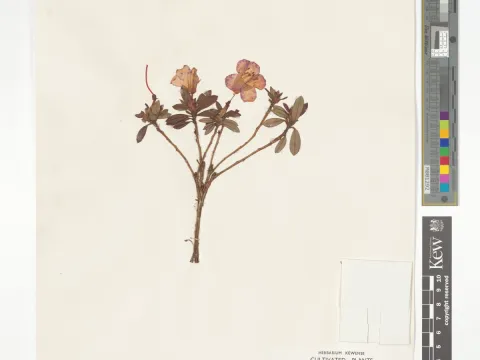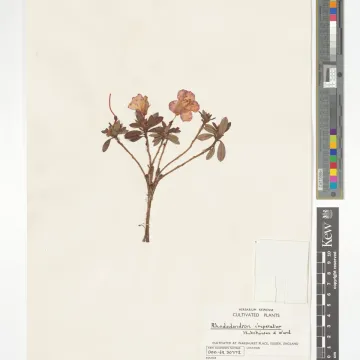

Emperor rhododendron
Rhododendron imperator
Description
The emperor rhododendron (Rhododendron imperator) is a dwarf evergreen shrub belonging to the Ericaceae family. Known for its prostrate, mat-forming growth habit, this species is highly valued in horticulture for its ability to provide year-round interest in specialized garden settings.
Native to the high-altitude regions of Myanmar, this species thrives in cool, humid environments. In cultivation, it requires specific microclimates that mimic its mountain origin, avoiding extreme heat and excessive exposure to direct afternoon sun, which can scorch its delicate foliage.
Botanically, it is characterized by its small, lanceolate, dark green leaves and a slow-growing habit that rarely exceeds 30 cm in height. During the spring, the plant produces vibrant purplish-pink trumpet-shaped flowers that contrast beautifully with its dense, compact evergreen structure.
Successful cultivation depends on acid-loving soil conditions, preferably a mixture of peat, pine bark, and coarse sand to ensure perfect drainage. The roots are shallow, making mulch application essential to maintain moisture and soil temperature consistency throughout the active growing season.
- Requires well-drained, acidic soil (pH 4.5–5.5).
- Benefits from partial shade to protect against intense sun.
- Requires protection from pests like mites and vine weevils.
- Needs regular inspection for leaf spot or fungal pathogens.
In landscaping, this plant is primarily used in rock gardens, alpine troughs, and as an ornamental groundcover. While it is generally hardy, gardeners must monitor for common rhododendron pests and ensure that winter protection is provided in regions with severe freezing temperatures to prevent foliage desiccation.
Photo gallery