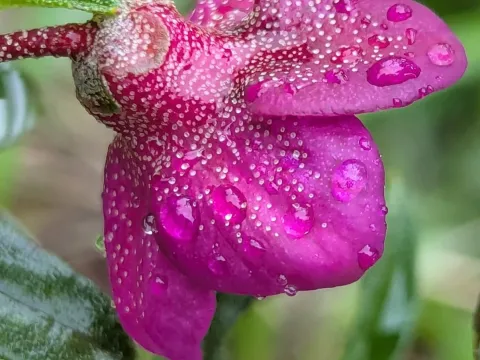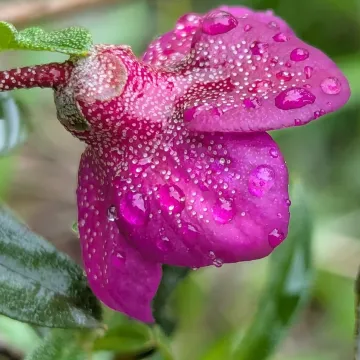
Scaly-leaved rhododendron
Rhododendron lepidotum
Description
Scaly-leaved rhododendron (Latin: Rhododendron lepidotum) is a small, evergreen or semi-evergreen shrub belonging to the Ericaceae family. This species is highly valued in horticulture for its compact growth habit and its ability to thrive in cool, moist environments, making it a distinctive choice for rock gardens and specialty landscaping.
The native habitat of this plant spans the high-altitude regions of the Himalayas, extending through India, Nepal, Bhutan, and China. Historically, it grows at elevations up to 4,500 meters, thriving in rocky terrains and slopes where the climate is characterized by significant diurnal temperature fluctuations and high atmospheric humidity.
Botanically, the plant is easily identified by the characteristic scales on the underside of its leaves, which gave the species its common and scientific names. The shrubs typically reach heights of 30 to 90 centimeters. Their foliage is leather-like, and they produce distinct flowers that range in color from yellow and pink to deep reddish-purple, appearing during late spring to early summer.
For successful cultivation, the species requires specific growing conditions. The soil must be highly acidic (pH 4.5–5.5) and rich in organic matter, such as peat or pine bark. Excellent drainage is critical to prevent root rot. It prefers cool temperatures and benefits from partial shade, particularly in climates that experience hot, dry summers.
- Requires well-drained acidic soil.
- Prefers cool and humid locations.
- Sensitive to lime and alkaline water.
- Susceptible to phytophthora and spider mites.
The economic use of this plant is primarily ornamental. When cultivated, it is susceptible to typical rhododendron pests such as spider mites and lace bugs, as well as fungal diseases including leaf spot and root rot. Preventive care, such as proper mulching with organic material and ensuring adequate soil aeration, is essential for maintaining plant health and longevity.
Photo gallery