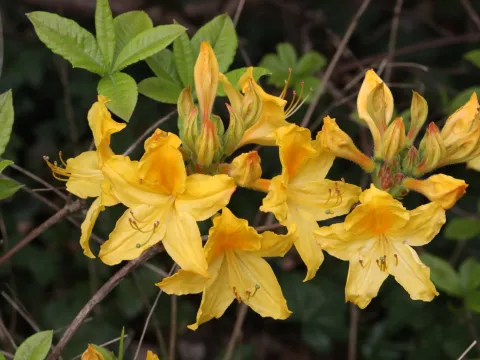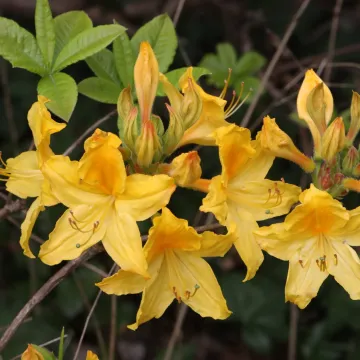
Yellow azalea
Rhododendron luteum
Description
Yellow azalea (Latin: Rhododendron luteum) is a deciduous flowering shrub belonging to the Ericaceae family. Widely recognized for its intense fragrance and brilliant yellow blooms, this plant is a staple in temperate ornamental gardening. It is often referred to by its former botanical name, Azalea pontica.
The native range of this species extends from Southeast Europe to the Caucasus and Turkey. In cultivation, it is highly valued for its winter hardiness and its ability to thrive in woodland garden settings. It prefers regions with moderate rainfall and cool to temperate climates, showing good resilience to varying environmental conditions once established.
Botanically, Rhododendron luteum features thin, spreading branches that can reach heights of up to 2 meters. The leaves are deciduous, turning vibrant shades of orange, red, and purple during the autumn months. The flowers appear in late spring, producing a strong, sweet scent that attracts pollinators, although gardeners should be aware that the plant contains toxic compounds.
Agricultural and horticultural success depends on maintaining an acidic soil profile, ideally with a pH level between 4.5 and 5.5. The root system is shallow and fibrous, requiring consistent moisture and excellent drainage. Mulching with pine bark or peat is highly recommended to protect the root zone from temperature fluctuations and to naturally suppress weeds while maintaining acidity.
The primary use of the yellow azalea is in landscaping and botanical hybridization. It serves as a parent species for many modern hardy deciduous azalea varieties. Maintenance includes monitoring for pests like spider mites and lace bugs, as well as fungal issues such as powdery mildew, which can occur if airflow around the foliage is restricted during humid summer spells.
- Soil requirements: acidic, moisture-retentive, organic-rich.
- Propagation: usually through cuttings or seeds in controlled environments.
- Key features: intense fragrance, high frost resistance.
- Caution: all parts of the plant are poisonous if ingested.
Photo gallery