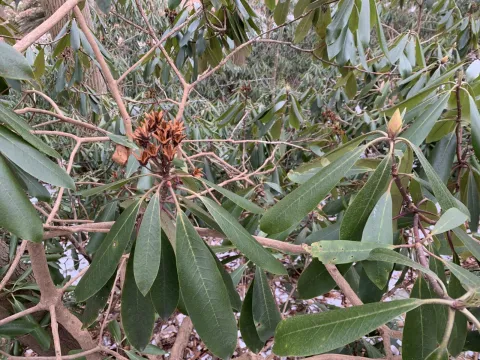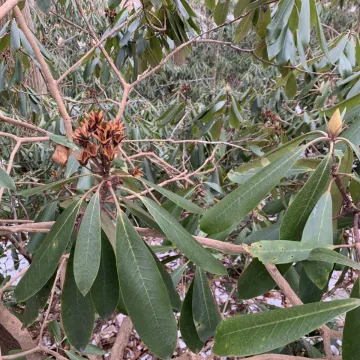
Great laurel
Rhododendron maximum
Description
Great laurel (Rhododendron maximum), also known as the rosebay rhododendron, is a sturdy evergreen shrub or small tree belonging to the Ericaceae family. It is widely recognized for its high tolerance to shade and its ability to thrive in diverse environmental conditions, making it a staple in woodland and landscape gardening. This species is highly valued for its dense, leathery foliage that remains vibrant throughout the entire year.
The native habitat of this plant is located in the eastern regions of North America, typically found in moist, mountainous areas and along stream banks. Because of its natural adaptation to such environments, the plant performs best in regions with cool summers and adequate moisture. Its range of cultivation has expanded to various temperate zones worldwide where acidic soil conditions are provided.
Botanically, Rhododendron maximum is characterized by large, glossy leaves and terminal clusters of flowers. The blooms, appearing in early summer, range from white to pale pink, often featuring yellowish-green or orange-brown spots on the interior petals. This display provides significant aesthetic value, especially when the shrub is planted in groups or as a focal point in a shaded landscape.
Agrotechnical requirements focus primarily on soil chemistry and moisture management. The plant demands well-draining, acidic soil rich in organic matter. Cultivators should ensure the planting site is shielded from harsh winds and intense sunlight. Consistent mulching with pine needles or bark is recommended to keep the root system cool and maintain the required acidic environment for optimal growth.
- Planting in partial shade to prevent leaf scorch.
- Maintaining consistent soil moisture, especially during dry spells.
- Using specialized fertilizers formulated for ericaceous plants.
- Avoiding waterlogged soil to prevent root rot issues.
- Periodic pruning to remove deadwood and maintain plant shape.
In terms of practical use, the Great laurel is primarily utilized for ornamental landscaping, serving as an excellent specimen plant or a foundation for naturalistic garden designs. However, it is susceptible to specific pathogens such as Phytophthora root rot and leaf spot diseases, which are exacerbated by poor air circulation and excessive humidity. Regular monitoring and appropriate chemical or biological controls are essential to ensure the longevity of the shrub.
Photo gallery