Swamp azalea
Rhododendron viscosum
Description
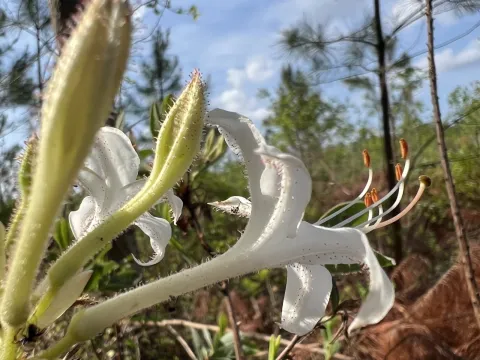
Swamp azalea (Rhododendron viscosum) is a deciduous flowering shrub belonging to the Ericaceae family. It is widely recognized in horticulture for its late-season blooms and intense, clove-like fragrance. The plant grows as a multi-stemmed shrub that can reach heights of 1 to 3 meters, characterized by sticky, glandular hairs on its new shoots and leaves.
Native to the eastern United States, this species is naturally found in low-lying, wet, and swampy areas, which is reflected in its common name. In agricultural and horticultural contexts, it is highly valued for its ability to thrive in moist environments where other shrubs might struggle, making it an excellent candidate for rain gardens or landscaping near water features.
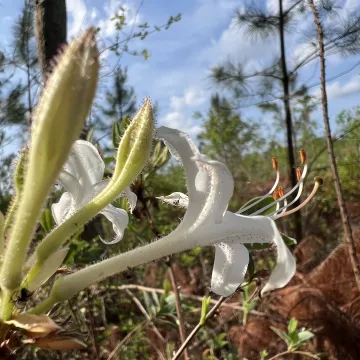
Botanically, the plant produces tubular flowers ranging from white to pale pink, which appear in mid-summer after the foliage is fully developed. The leaves are glossy and lanceolate, often transitioning into vibrant shades of orange, yellow, and red during the autumn months, providing year-round interest in the landscape.
Agronomic success with this species depends on providing an acidic (pH 4.5–5.5) and organic-rich soil that remains consistently moist but not waterlogged. It thrives best in partial shade, as full exposure to intense sunlight can desiccate the foliage. Proper maintenance includes generous mulching with pine needles or bark to conserve soil moisture and suppress competition from weeds.
The culture is susceptible to common ericaceous pests and diseases, including powdery mildew and Phytophthora root rot, which are often encouraged by poor soil drainage. Pest management may occasionally be required for spider mites or leaf-feeding insects. Maintaining plant vigor through proper fertilization and avoiding overhead watering in the evenings can significantly reduce disease pressure.
- Sunlight: Partial shade
- Soil pH: Highly acidic (4.5–5.5)
- Moisture: Needs constant moisture
- Hardiness: Frost resistant
Photo gallery