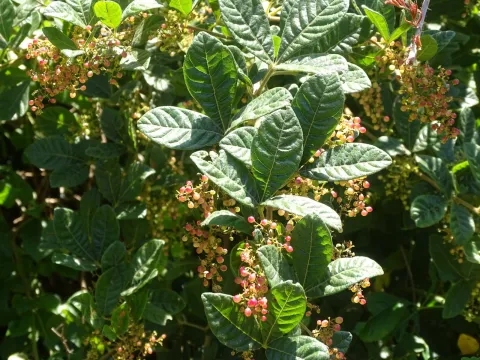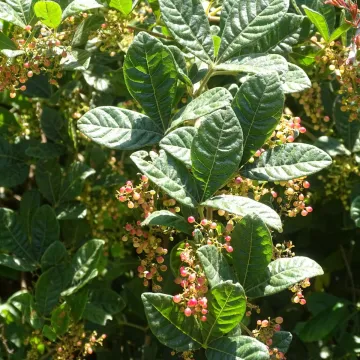

Rhus macowanii
Rhus macowanii
Description
Rhus macowanii is a woody perennial plant belonging to the Anacardiaceae family. Known for its adaptability, this species typically grows as a robust shrub or a small evergreen tree. Its biological structure is designed to thrive in coastal environments, often serving as a key component of the local flora.
The origin of Rhus macowanii is traced back to South Africa. Its natural range is concentrated in regions characterized by temperate maritime climates. The plant is well-adapted to specific soil types found in these areas, demonstrating significant resilience to local environmental fluctuations and wind exposure.
Botanically, the species is distinguished by its leathery, compound leaves and small, inconspicuous flowers that develop into drupe-like fruits. The root system is deep and expansive, allowing the plant to remain stable in sandy or rocky substrates. It is considered a drought-tolerant species once it has established itself in the landscape.
Agronomic requirements emphasize the necessity of well-draining soil and exposure to full sunlight. While it is not particularly demanding regarding soil fertility, it benefits from moderate applications of organic fertilizers during the early growth stages. Pruning should be performed annually to maintain the desired shape and promote healthy lateral growth.
Primary хозяйственное usage includes decorative gardening, windbreak establishment, and erosion control. Due to its dense foliage, it is an excellent choice for privacy screening. Typical pests and diseases are minimal, though gardeners should watch for:
- aphids during humid seasons
- powdery mildew in shaded areas
- root rot caused by poor soil drainage
Photo gallery