Littleleaf sumac
Rhus microphylla
Description
Littleleaf sumac (Rhus microphylla) is a deciduous woody shrub or small tree belonging to the Anacardiaceae family. Renowned for its resilience, this species thrives in environments where other ornamental plants often fail due to extreme aridity or harsh solar radiation.
The species is native to the southwestern United States and northern Mexico, typically inhabiting grasslands, desert scrublands, and rocky slopes. Its evolutionary development in these environments has resulted in a plant that is highly efficient in water management and thermal regulation.
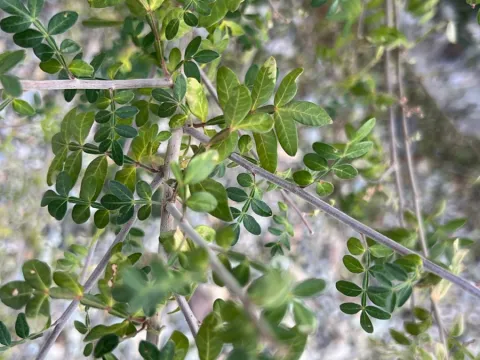
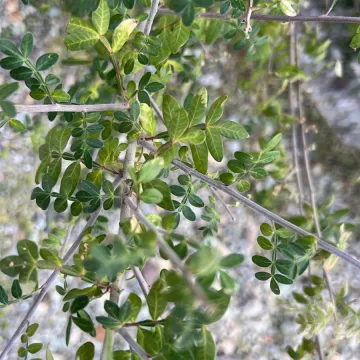
Botanically, the plant is distinguished by its small, pinnately compound leaves that provide a delicate, lace-like appearance to its canopy. It produces clusters of small, creamy-white flowers that eventually transform into distinctive orange-red drupes, which are a valuable resource for local wildlife during the colder months.
Cultivation requirements for Rhus microphylla focus primarily on soil drainage and exposure. It demands full sun and performs best in well-aerated, rocky, or sandy soils. Over-irrigation is the most common cause of failure in cultivation, as the species is highly susceptible to root decay if the substrate remains saturated for prolonged periods.
In terms of practical utility, littleleaf sumac is widely used in xeriscaping to create naturalistic barriers and stabilize slopes prone to soil erosion. The berries have historical culinary uses, while the tannins in the foliage and bark provide ecological value. Typical maintenance involves minimal pruning to manage shape and regular monitoring for common pests like aphids during the active growth phase.
Photo gallery