Sugar bush
Rhus ovata
Description
Sugar bush (Rhus ovata) is a prominent evergreen shrub or small tree belonging to the Anacardiaceae family. Renowned for its resilience and year-round dark green, glossy foliage, this plant is a staple in xeriscaping and sustainable gardening practices across its native range.
The natural habitat of this species is located in the southwestern United States and northwestern Mexico. It is commonly found in the chaparral plant community, growing effectively on dry slopes and ridges. This geographic origin has endowed the plant with remarkable adaptation to Mediterranean climates with distinct wet and dry seasons.
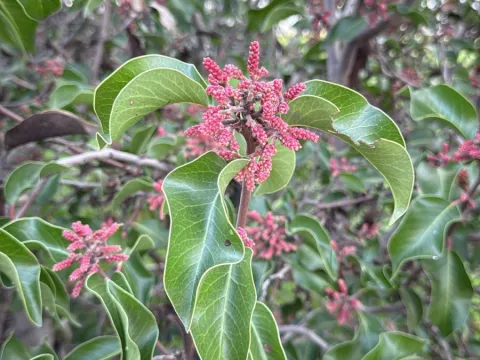
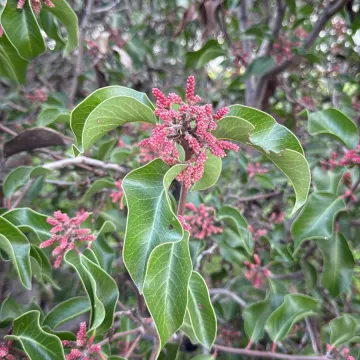
Botanically, Rhus ovata is distinguished by its rigid, leathery, ovate-shaped leaves that often curl along the midrib. The inflorescences consist of small, pinkish-white flowers that emerge in spring, followed by dense, sticky red fruits. These botanical features contribute to its architectural appeal in outdoor environments.
Cultivation requirements are relatively straightforward, provided the plant is situated in full sun and well-draining soil. Once established, it requires very little supplemental water, making it an ideal candidate for water-wise landscaping. It is generally hardy and does not require extensive pruning, although light shaping can maintain a cleaner profile.
The plant is widely used for bank stabilization and as a structural element in large-scale gardens. Regarding phytosanitary concerns, it is remarkably resistant to common pests, though root rot can occur if soil drainage is insufficient. Proper site selection remains the most critical factor in preventing health issues for this robust shrub.
Photo gallery