Evergreen sumac
Rhus virens
Description
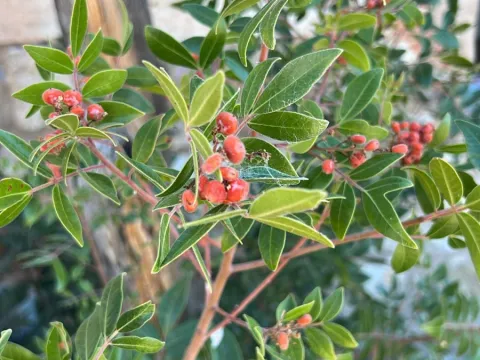
Evergreen sumac (Rhus virens) is a perennial shrub belonging to the Anacardiaceae family. Unlike many of its cousins in the Rhus genus which are deciduous, this particular species maintains its foliage throughout the year, offering year-round visual appeal and structural presence in arid gardens.
Native to the southwestern United States and Mexico, specifically regions like Texas, it thrives in limestone soils and rocky canyons. The species is highly adapted to semi-arid climates where it survives on minimal rainfall and withstands significant heat exposure during the summer months.
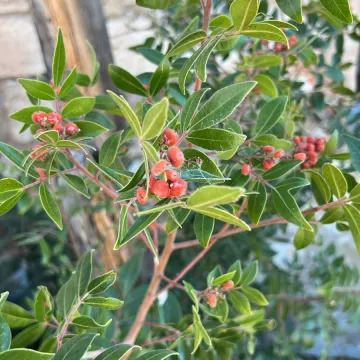
Botanically, it typically reaches heights of 3 to 4 meters. The plant features pinnately compound leaves with a glossy, leathery texture that reduces transpiration. During the spring, it produces small white flowers followed by reddish-brown, pubescent drupes that persist on the branches, providing food for various bird species.
Regarding agrotechnical requirements, Rhus virens demands full sun and exceptionally well-drained soil. It is intolerant of heavy, saturated soils which can lead to root rot. Once established, the plant is extremely drought-tolerant and requires very little maintenance, though it responds well to light pruning to maintain a tidy canopy.
In terms of practical application, it is widely valued in xeriscaping and sustainable landscaping. It serves as an excellent screening plant or windbreak in regions with high temperatures. Common pests include scale insects and occasional fungal pathogens if the soil drainage is inadequate, but overall, it remains a robust and disease-resistant choice for dry climates.
- Evergreen foliage year-round
- Exceptional drought tolerance
- Suitable for rocky and calcareous soils
- Low-maintenance landscaping profile
Photo gallery