Needle currant
Ribes aciculare
Description
Ribes aciculare, commonly known as the needle currant, is a perennial deciduous shrub belonging to the Grossulariaceae family. This species is highly regarded for its exceptional adaptation to harsh mountain climates and its significant role as a wild genetic reservoir for modern berry breeding programs.
The plant originates from the mountainous regions of Central Asia, Siberia, and parts of Mongolia. It typically inhabits rocky slopes, mountain meadows, and thickets, thriving in environments characterized by short growing seasons, severe winter cold, and thin, often nutrient-poor soils.
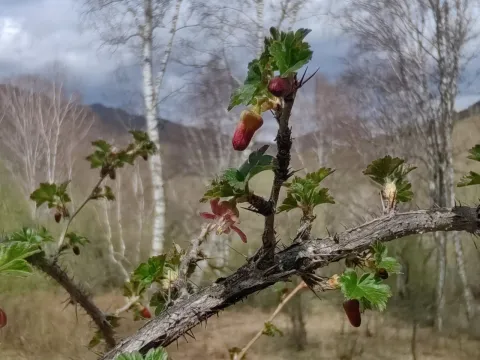
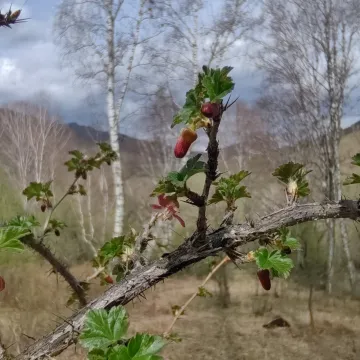
Botanically, the needle currant is a compact shrub characterized by stiff, needle-like spines on its branches, which provides excellent protection from herbivores. Its leaves are three- to five-lobed, while the berries are typically small, round, and dark red or blackish, offering a tart flavor profile enriched with high concentrations of vitamin C and organic acids.
Agricultural requirements for Ribes aciculare focus on excellent drainage and light exposure. Unlike many garden varieties, this species is less demanding regarding soil fertility, though it requires a neutral to slightly acidic pH. In cultivation, it is best suited for cooler regions where its inherent cold hardiness can be fully utilized without risking heat-related stress.
The economic and practical uses of the needle currant include:
- Commercial and home processing of berries into preserves, syrups, and functional foods.
- Genetic research aiming to improve cold and drought resistance in commercial blackcurrant varieties.
- Use in ornamental gardening for creating impenetrable, wildlife-friendly hedgerows.
- Traditional herbal medicine applications due to the high antioxidant content of the fruit.
Cultivation challenges primarily involve fungal diseases, such as leaf spot and powdery mildew, which can arise if planting density is too high or air circulation is poor. Proper site selection and periodic pruning to maintain plant health are essential to prevent pest infestations, such as scale insects or bud mites, which are typical for the Ribes genus.
Photo gallery